


Busy floors face constant pressure from shoes, dust, spills, trolley wheels, and frequent cleaning. Over time, tracked-in grit can dull the surface and make weak flooring look worn. That is why choosing matt tiles for high-traffic areas takes more than finding a color or design you like.
The right tile should combine a dense body, strong wear resistance, tested surface grip, stain resistance, and practical cleaning needs. This guide explains how matt porcelain tiles, matt vitrified tiles, and textured options compare. It also covers the technical details you should check before buying tiles for a busy home, office, shop, hallway, or public interior.
Are Matt Tiles Good for High-Traffic Areas?
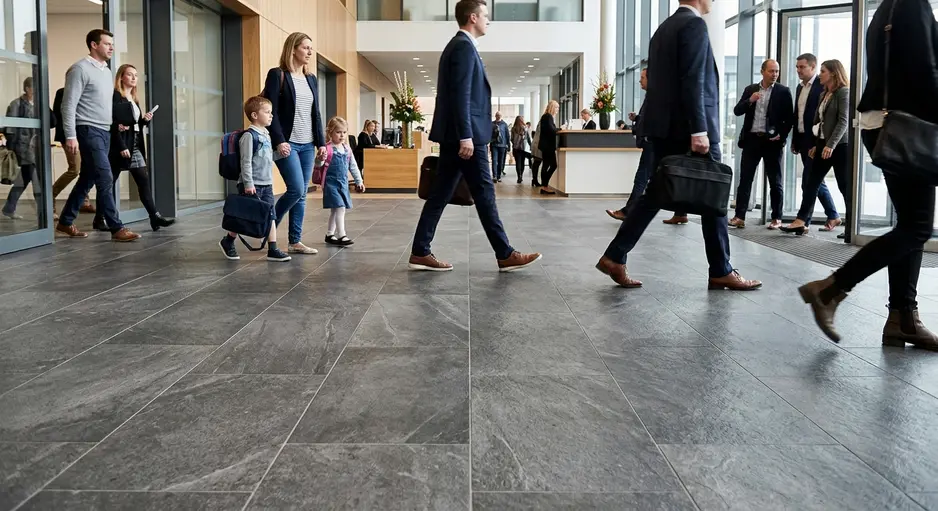
Yes, properly rated matt tiles can perform well in busy locations. Their low sheen surface limits glare and gives interiors a calm, modern look. It can also make light scuffs and water marks less obvious than they may be on polished flooring.
Benefits of a Low-Sheen Surface
Matt floor tiles are available in stone, cement, wood, fabric, and terrazzo-inspired patterns. This makes them useful for many indoor flooring solutions, from family hallways to large reception areas.
- Reduced glare in offices, shops, and showrooms
- A restrained finish that works with modern interiors
- Better dirt-hiding capability when patterns and colors are chosen well
- Less visible light marking than on many reflective surfaces
- Possible surface grip when supported by suitable testing
Matt Does Not Always Mean Slip-Resistant
A matt finish and an anti-slip tile surface are not the same thing. A tile may look textured yet become slippery when exposed to water, oil, dust, or cleaning residue. Footwear, floor slope, and the type of contamination also affect slip resistance.
Ask for recognized wet slip-resistance test results that apply to the intended setting. ANSI A326.3 may be relevant in applicable markets, while local building codes can set further requirements. Labels such as “matt,” “rustic,” or “anti-skid” should not replace technical data.
What Makes a Matt Floor Tile Durable?
Wear and Abrasion Resistance
Surface wear becomes important where sand, dirt, chair wheels, and footwear act as abrasives. Abrasion resistance shows how well a tile surface can withstand this repeated action. It is not the same as resistance to a single sharp scratch.
For glazed tiles, the PEI rating helps buyers assess surface-wear suitability. PEI 4 products are commonly considered for heavier residential use and many commercial settings. PEI 5 may be specified for more demanding traffic. However, the manufacturer’s declared application should always guide the final choice.
PEI applies to the abrasion of glazed surfaces. Unglazed tiles may instead be assessed through deep-abrasion testing, such as ISO 10545-6. ISO 10545-7 relates to the surface abrasion of glazed ceramic tiles.
Low Water Absorption and Density
A dense tile with low water absorption is generally less open to moisture penetration. Porcelain is commonly classified with water absorption of 0.5% or less under recognized systems. ISO 10545-3 is used to determine water absorption and related physical properties.
Do not assume every product sold as porcelain or vitrified performs in the same way. Check the tested percentage, product construction, and intended use on the technical data sheet.
Scratch and Stain Resistance
Scratch resistant matt tiles are not scratch-proof. Fine sand and grit can damage many floor finishes when they are dragged under shoes, furniture, or equipment. Entrance mats and frequent dry cleaning help reduce this risk.
For commercial flooring applications, also check stain and chemical-resistance data. These details matter in shops, cafés, offices, and public areas where spills and frequent cleaning are common.
Abrasion resistance
Why it matters: Helps the surface cope with traffic and grit. Verify the PEI classification or applicable ISO result.
Water absorption
Why it matters: Indicates tile density and moisture performance. Check the manufacturer’s tested percentage.
Slip resistance
Why it matters: Helps assess surface grip under stated conditions. Review the test method and whether testing was wet or dry.
Stain and chemical resistance
Why it matters: Supports easier maintenance where spills and regular cleaning are expected. Confirm approved products and methods.
Which Matt Tiles Are Best for Heavy Foot Traffic?
Full-Body or Unglazed Vitrified Tiles
Full-body or unglazed matt vitrified tiles can be a strong option for demanding locations. Because their body composition is more consistent through the tile, long-term wear may be less visually obvious than on some surface-decorated products.
Suitable products may work in corridors, shops, and transport-adjacent interiors. Still, buyers should verify deep-abrasion performance, slip test results, water absorption, and the approved application for each product.
Glazed Matt Porcelain Tiles
Glazed matt porcelain tiles pair a dense body with a decorative surface. They offer a wide choice of stone, concrete, wood, and terrazzo looks. This makes them popular as matt tiles for busy homes and design-led commercial interiors.
Durability depends on the glaze and its wear classification. For demanding floors, check the PEI rating and the manufacturer’s use guidance rather than judging quality from the design alone.
Textured Matt Tiles
Extra texture may improve grip in selected settings, but deeper profiles can collect soil and cleaning residue. They often require brushes or machines rather than simple mopping. Choose texture only after balancing slip risk with tile cleaning requirements.
Large-Format Matt Floor Tiles
Large tiles create fewer grout joints, which can make routine care easier. However, they need a flat, stable substrate and skilled installation. Their size does not make them more durable; tile body quality and technical ratings still control performance.
Before specifying a large project, compare technical sheets and request samples from an established supplier such as Liberta Vitrified. Confirm the data for the individual product rather than assuming every collection is suitable for heavy foot traffic.
Best Matt Tiles by Application
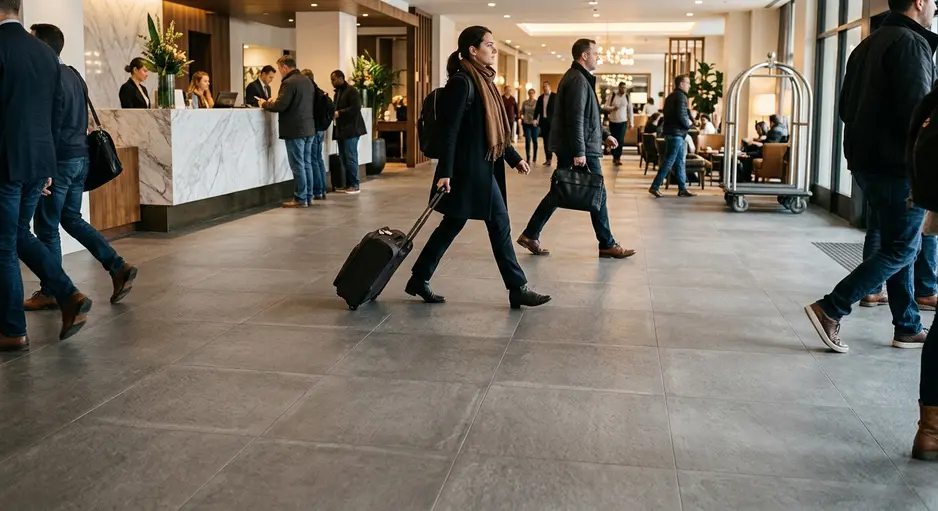
Busy Homes and Hallways
Matt tiles for hallways should cope with grit, shoes, pets, and regular cleaning. Consider a properly rated porcelain or vitrified tile with a medium-tone stone, cement, or terrazzo pattern. Avoid very deep texture unless extra grip is necessary.
Application scenario: A mid-grey stone-look tile can conceal daily dust better than plain black flooring. Coordinated grout and entrance matting can further reduce visible marks.
Offices
Matt tiles for offices should offer low glare, easy maintenance flooring, and resistance to chair movement. Neutral designs suit professional interiors, but practical demands must come first. Review rolling loads, furniture movement, and the cleaning routine before selecting the product.
Application scenario: A subtle terrazzo-look floor in a reception area can disguise small debris while supporting regular mop or machine cleaning.
Retail Spaces
Matt tiles for retail spaces need strong abrasion and stain resistance, especially near entrances and checkout points. Patterns with gentle shade variation can hide dust between cleaning cycles. It is also wise to keep replacement tiles from the same production batch.
Application scenario: A commercially rated matt vitrified floor may support frequent customer traffic while maintaining a comfortable, low-glare appearance.
Public and Commercial Areas
Matt tiles for public areas require more detailed assessment. Consider pedestrian volume, trolleys, wheeled equipment, point loads, cleaning chemicals, and wet-floor risks. The product should have a verified commercial-use classification that matches the location.
Local safety, accessibility, and slip-resistance rules may apply. Architects and flooring specialists should review these requirements when specifying matt tiles for commercial spaces.
How Do You Choose High-Traffic Matt Tiles?
Review the Technical Data Sheet
Use the product data sheet to compare durable matt tiles. Look for clear test methods and declared results rather than broad marketing terms.
- Approved floor and traffic application
- Glazed, unglazed, or full-body construction
- Water-absorption percentage
- PEI rating or relevant abrasion-test result
- Wet and dry slip-resistance information
- Stain and chemical resistance
- Tile thickness and calibrated dimensions
- Warranty terms and maintenance exclusions
Test a Sample in Real Conditions
- View several pieces in the project’s actual lighting.
- Place dust, water droplets, and likely spills on the sample.
- Clean it with the proposed tools and cleaner.
- Check whether the texture holds mop fibres or residue.
- Review shade and pattern variation between pieces.
- Place possible grout colors next to the tile.
Match the Tile to the Traffic Type
Footfall is only part of the issue. Exterior grit near an entrance can accelerate wear. Wheeled chairs place different demands on flooring than walking traffic, while cafes face more frequent spills. Wet corridors need a separate slip-risk assessment.
What PEI Rating Is Best for High-Traffic Floors?
PEI 4 is commonly considered for heavier residential and many commercial settings. PEI 5 may suit more demanding traffic. Always follow the stated product application because PEI measures glazed surface abrasion, not slip resistance, structural strength, or every aspect of quality.
Installation and Maintenance Best Practices
Prepare the Subfloor Correctly
Install high-traffic floor tiles over a flat, stable, and properly cured substrate. Use compatible adhesives and grout, maintain required movement joints, and achieve suitable adhesive coverage. Large-format tiles and commercial floors should be fitted by qualified installers.
Prevent Construction Haze
Protect new flooring from dust and damage caused by other trades. Remove grout residue according to the tile and grout manufacturer’s directions. Harsh acids should not be used unless they are expressly approved.
Poor post-installation cleaning can leave a dull film that makes matt floor tiles appear permanently dirty. It may also affect surface grip.
Create a Simple Cleaning Routine
- Use entrance mats to catch grit and moisture.
- Vacuum or sweep before wet cleaning.
- Use a neutral-pH cleaner where recommended.
- Avoid waxes that leave residue or change slip performance.
- Clean textured surfaces with suitable brushes.
- Replace worn or saturated entrance mats.
Mistakes to Avoid When Buying Matt Floor Tiles

- Assuming every matt finish is anti-slip.
- Choosing by color without checking technical ratings.
- Treating a PEI rating as a complete measure of quality.
- Selecting deep texture without considering cleaning effort.
- Assuming solid black tiles will hide dust.
- Ignoring grout color and joint maintenance.
- Using residential products in busy public settings.
- Failing to order spare stock for future repairs.
- Skipping professional installation for large-format tiles.
- Accepting “scratch-proof” or “stain-proof” claims without data.
For matt tiles for commercial flooring, consult the manufacturer, architect, or flooring professional. The correct specification should reflect both expected traffic and local safety requirements.
Choose Performance Before Appearance
The best matt tiles for high-traffic areas combine a suitable tile body with verified abrasion performance, appropriate slip testing, manageable cleaning needs, and professional installation. The right choice depends on where the floor will be used and what it will face each day.
Explore the matt floor tile collections available from Liberta Vitrified and request technical information, samples, or application guidance before making a final decision. Comparing real samples and product data can help you select dependable flooring for busy homes, offices, retail spaces, and public interiors.
Frequently Asked Questions
1. Are matt tiles suitable for high-traffic areas?
Yes, when they have suitable abrasion resistance, low water absorption, tested slip performance, and an approved use classification. “Matt” only describes the visual finish. It does not guarantee that a tile is durable or appropriate for commercial use.
2. Are matt porcelain tiles slippery when wet?
Some can be. A low-sheen appearance does not prove wet slip resistance. Check results from a recognized test and confirm that the tile is approved for the intended dry, wet, residential, or commercial location.
3. Do matt floor tiles scratch easily?
Quality porcelain and vitrified products can offer strong wear resistance, but no floor is completely scratch-proof. Sand and grit are common causes of abrasion. Use entrance mats, sweep regularly, and place protective pads under movable furniture.
4. Which tile color is easiest to maintain?
Medium shades with subtle stone, concrete, or terrazzo variation tend to conceal dust and light marks. Solid white, glossy black, and very dark plain surfaces often reveal dirt, footprints, or cleaning residue more clearly.
5. Are porcelain or vitrified tiles better for commercial spaces?
Both can be suitable. The better choice is the individual product with verified water absorption, abrasion, slip, stain, and chemical-resistance results for the project. Category names alone do not confirm performance.