Textured and marble-inspired tiles can add depth, movement, and character to an interior. Yet terms such as endless carving and normal carving often cause confusion. Buyers may assume they are entirely different tile categories, even though both can have a carved or textured surface.
The main difference usually lies in how the graphic flows. Endless carving tiles aim to create visual continuity across compatible faces. Standard carving tiles focus more on grooves, relief, or selective surface effects. Since these terms can vary by manufacturer, always check technical documents, installation instructions, and physical samples before making a final choice.
What Is the Difference Between Endless Carving and Carving Tiles?
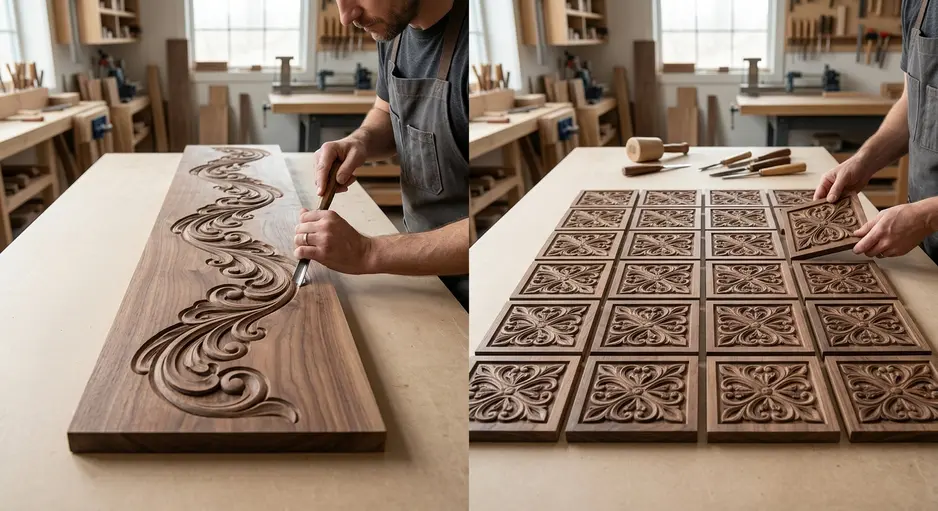
Comparison at a glance
Main design objective: Endless products focus on visual continuity, while standard carved products focus on defined texture.
Pattern behavior: Endless designs may flow from one compatible face to another. Standard designs are often self-contained or repeated.
Surface appearance: Endless surfaces often coordinate veins with printed graphics. Carved surface tiles may place greater emphasis on grooves and relief.
Pattern variation: Endless collections may use controlled face sequences. Standard products may offer repeated or random pattern variation.
Installation: Endless patterns often need a directional dry layout. Standard carved products may allow more flexible placement.
Common uses: Endless designs suit broad walls and floors. Decorative carving tiles work well in feature zones.
Maintenance: Cleaning depends on surface depth. Deep relief texture usually needs more attention than a lightly structured finish.
How Does Endless Carving Technology Work?
Digital printing and selective glazing
Endless carving technology often uses high-definition surface printing to reproduce marble veins, stone movement, or abstract graphics. Digital glazing technology may then add selective gloss, matt areas, or fine texture to parts of the design.
This process can make a printed vein look deeper or more tactile. However, not every product described as carved has a deep physical groove. Some designs use changes in light and sheen to create the impression of surface depth. Buyers should examine a tile from different angles instead of relying only on catalogue renders.
How visual continuity is created
The tile faces may form a planned sequence, or they may use edge transitions that connect in certain directions. Some collections provide several faces to reduce obvious repetition and create a natural flow across a large area.
However, “endless” does not always mean that any tile will connect on every edge. Rotation, laying direction, face number, and sequence may affect pattern consistency. Before installation, ask for face charts, directional arrows, shade details, and laying guidance.
Continuous flow or random variation?
A coordinated pattern works well when the goal is a flowing marble-inspired design. It can guide the eye across a lobby, living room, or tall wall. Random variation produces a less controlled result but may resemble the changing character of natural stone.
Neither approach is automatically better. The right choice depends on the desired interior design aesthetics and the size of the tiled area.
What Are Carving Tiles?
Deep relief and three-dimensional detail
Carving tiles have raised, recessed, or selectively finished details. The surface may include fine lines, shallow channels, glossy veins, or a pronounced three-dimensional texture. The carved treatment can follow the printed graphic or form an independent decorative motif.
Some products use subtle carving that is easy to feel but does not create strong grooves. Others have deep relief texture intended mainly for walls. Pronounced relief creates dramatic shadows, especially under side lighting, but it can also collect more dust or residue.
High gloss carving tiles vs matt finishes
High gloss carving tiles reflect more light and can make veins or ornamental details stand out. They may suit polished, luxurious spaces. Matt carved surfaces have a softer appearance and often complement stone, concrete, wood, or fabric effects.
Finish alone does not determine flooring suitability. A glossy tile is not automatically unsafe, and a rough tile is not automatically slip-resistant. The approved application and test results are more useful than appearance.
Popular carving tile designs
- Marble and natural stone effects
- Wood-grain patterns
- Geometric lines and shapes
- Botanical and ornamental motifs
- Concrete-inspired surfaces
- Metallic or fabric-like textures
Endless Carving vs Carving Tiles: Detailed Comparison
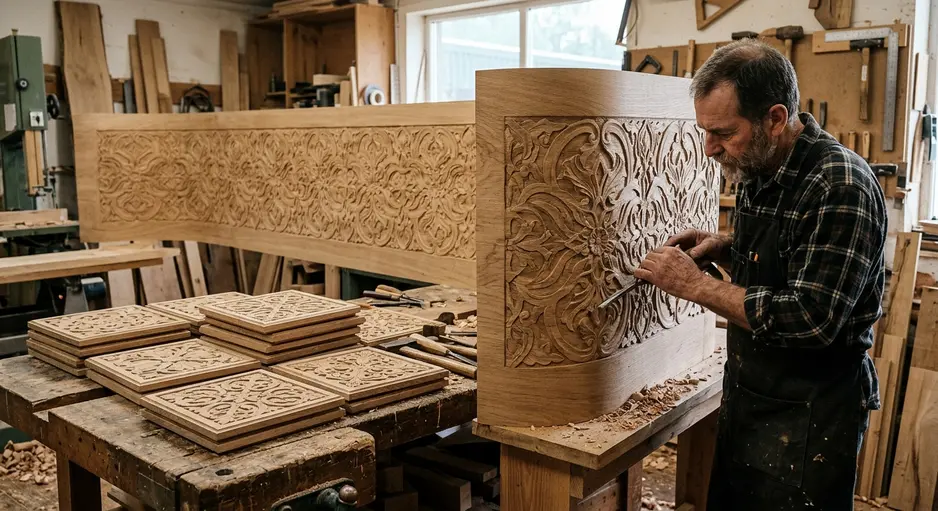
Pattern consistency and grout joints
Endless designs are often the stronger choice when movement needs to continue across a wide surface. Standard carving tile designs can create a bolder standalone motif or a planned repeat. They work well when each tile should contribute a clear decorative element.
Grout also affects the result. Wide joints or a high-contrast grout color can break visual continuity. A closer grout tone may make the surface feel more unified. The joint width must still follow the tile manufacturer’s instructions and applicable installation standards.
Surface depth and tactile character
An endless carving surface may use light texture and selective glazing to support the printed veins. Standard carving can range from fine etched lines to strong relief. Deeper textures cast more visible shadows, but they may feel less practical in areas exposed to grease, soap, or heavy dust.
Flooring and slip performance
Do not select floor tiles based on the carving label alone. Check the manufacturer’s intended-use guidance, declared slip test, abrasion performance, breaking strength, and water absorption. ISO 10545 test information may help buyers compare relevant technical properties when current reports are available.
Strongly textured products can also be uncomfortable underfoot or harder to clean in busy spaces. For wet areas and commercial floors, confirm that the exact product and finish are approved for the intended setting.
Maintenance requirements
Smooth or lightly textured surfaces are usually simpler to wipe. Deep grooves may need a soft brush to remove dust, soap film, or kitchen residue. Use a cleaner approved by the supplier, and avoid abrasive tools that could alter the finish.
Cost and installation complexity
Endless carving tiles may require sorting, sequencing, and more layout time. Standard carved products can offer greater flexibility, although complex motifs still need careful planning.
Compare the total installed cost rather than only the tile rate. Include surface preparation, adhesive, grout, cutting, labor, wastage, and replacement stock. A skilled installer may be especially valuable for large formats and directional patterns.
Where Should Each Tile Type Be Used?
Endless carving tiles for modern interiors
Broad, uninterrupted areas make a flowing pattern easier to appreciate. Suitable applications may include open-plan living rooms, hotel lobbies, reception areas, hallway walls, retail showrooms, and large floors—provided the selected product is approved for that use.
For example, a marble-look endless design can help an open living and dining floor feel more connected. Fewer visual breaks may also make a spacious room appear calmer.
Endless carving tiles for luxury interiors
Luxury foyers, boutique spaces, double-height walls, and hospitality interiors often benefit from long, coordinated veins. These surfaces can deliver the look of a large stone composition while offering the practical qualities declared for the selected tile.
Bathroom walls can also benefit from flowing graphics. Wet-floor use, however, should only be considered after checking slip performance and the approved application.
Feature wall applications for carving tiles
Standard decorative carving tiles are a strong option when texture matters more than continuity. Common locations include TV walls, headboard walls, reception backdrops, restaurant accents, display niches, and decorative bathroom walls.
In a commercial reception area, for example, a carved wall can add three-dimensional detail without requiring a pattern to continue across the entire room.
How to Choose Between Endless Carving and Carving Tiles
Begin with the design outcome
Choose an endless design when you want a coordinated graphic across a large surface. It is particularly useful for flowing stone effects and projects where the installer can follow a directional plan.
Choose standard carving when tactile detail is the priority. It can be a better fit for a standalone motif, decorative zone, or feature wall where flexible placement is useful.
Use this five-point checklist
- Verify the application: Confirm whether the tile is approved for walls, floors, wet areas, exteriors, or high-traffic commercial spaces.
- Inspect several faces: One sample cannot show the full pattern variation or continuity of a collection.
- Review technical data: Check water absorption, slip performance, abrasion, stain resistance, and breaking strength where relevant.
- Dry-lay the pattern: Arrange the tiles before fixing them to confirm direction, sequence, and graphic flow.
- Consider daily care: Decide whether glossy areas, grooves, and relief are practical for the location.
Match the design scale to the room
Large tiles can reduce interruptions from grout, but they need a flat substrate and skilled installation. Active graphics or heavy relief may overwhelm a compact room. Lighting matters too. Side lighting makes grooves and shadows stronger, while direct light can increase glare on glossy sections.
Installation and Maintenance Best Practices
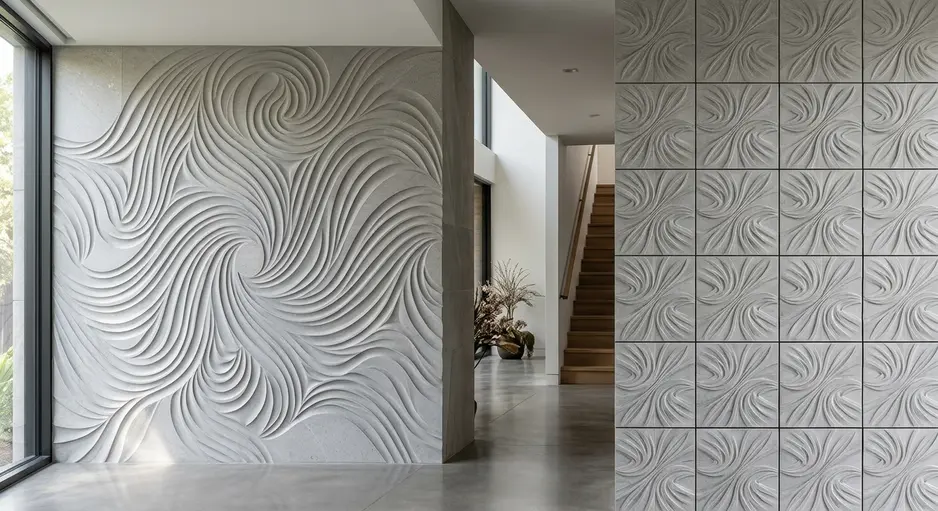
Plan before fixing the tiles
Open boxes and inspect pieces from more than one carton. Confirm the shade, caliber, face number, and laying direction. Dry-lay important sections so the installer and designer can agree on the final flow.
Never assume that every face connects in every orientation. Obtain written instructions from the supplier, especially when the design uses sequences or directional arrows.
Protect the pattern at joints and corners
Choose grout that supports the desired appearance while following the recommended joint width. Plan cuts around doors, corners, columns, and sanitary fittings before installation begins. Poorly placed cuts can interrupt even a well-designed pattern.
Clean carved surfaces correctly
Remove installation residue promptly with an approved cleaner. For routine care, use a suitable pH-neutral product unless the manufacturer advises otherwise. Clean grooves with a soft brush and avoid waxes or coatings that may change the gloss, texture, or slip behavior.
Keep spare tiles from the same production batch. This makes future repairs easier and reduces the risk of noticeable shade or pattern differences.
Explore Endless Carving & Carving Tiles
Make the Right Choice for Your Space
Choose endless carving for coordinated visual flow across large walls or floors. Choose standard carving tiles when pronounced texture, flexible placement, or standalone decorative impact matters more.
Neither option is universally better. Your decision should reflect the room size, intended use, technical performance, cleaning needs, lighting, and installer experience. Explore Liberta Vitrified’s tile collections or contact the team to compare finishes, applications, available faces, and technical specifications for your project.
Frequently Asked Questions
1. Are endless carving tiles suitable for flooring?
They may be suitable if the exact product is approved for floors. Check slip resistance, strength, abrasion performance, water absorption, finish, and expected traffic. The endless carving label alone does not confirm floor suitability.
2. Do endless carving tiles connect in every direction?
Usually not. Some products use coordinated faces, sequences, or directional arrows. Ask for a face chart and dry-lay the tiles before installation to confirm how the pattern connects.
3. Are carving tiles difficult to clean?
Lightly textured surfaces are generally manageable. Deep grooves can hold dust, grease, or soap residue and may need soft-bristle cleaning. Maintenance also depends on the grout and installation area.
4. Which option is better for a feature wall?
Decorative carving tiles are ideal when strong texture or a standalone motif is the focus. Endless designs may work better for a broad wall that needs a flowing marble or stone appearance.
5. Are high gloss carving tiles slippery?
Gloss does not provide enough information to judge slip safety. Review the declared slip test and approved use. A finish intended for a dry wall may not be suitable for a bathroom or commercial floor.