


When it comes to tiling, one of the most crucial decisions you’ll make is selecting the right tile thickness for your walls and floors. Choosing the perfect floor tiles or wall tiles isn’t just about aesthetics it directly impacts durability, installation, and safety. In this guide, we break down everything you need to know about floor tile thickness versus wall tile thickness so you can make an informed choice.
What is Tile Thickness?
Tile thickness refers to the measurement of a tile from its top surface to the bottom. It might seem like a minor detail, but it is one of the most important factors that determine a tile’s durability, usability, and installation method.
Floor tiles thickness is usually higher than wall tiles thickness because floor tiles have to withstand foot traffic, furniture weight, and daily wear and tear. Wall tiles, on the other hand, are primarily decorative and don’t face heavy pressure, allowing them to be thinner.
Why Tile Thickness Matters
Tile thickness may seem like a minor detail, but it plays a significant role in performance. Tiles that are too thin can crack under pressure, while tiles that are too thick may be unnecessarily heavy and difficult to install.
-
Durability: Thicker tiles are ideal for high-traffic areas like kitchens and hallways.
-
Installation: Proper thickness ensures that tiles sit flush with surrounding surfaces, reducing uneven joints.
-
Cost: Thicker tiles generally cost more due to material usage and installation requirements.
Understanding the difference between floor tiles and wall tiles thickness helps you avoid common mistakes and ensures your investment lasts for years.
Wall Tiles: Lighter and Thinner
Wall tiles, on the other hand, mainly serve decorative purposes and are not exposed to heavy loads. They are lighter and thinner.
-
Standard Thickness: 6mm to 10mm is typical for wall installations.
-
Material Consideration: Ceramic and lighter porcelain tiles work well for walls.
-
Usage Areas: Bathrooms, kitchens, feature walls, and backsplashes.
Key Considerations for Wall Tiles:
-
Weight: Lighter tiles reduce the risk of falling off walls over time.
-
Ease of Cutting: Thin tiles are easier to cut, making intricate patterns and designs more achievable.
-
Aesthetics: Thinner tiles create a sleek, seamless look, especially for bathroom or kitchen backsplashes.
Floor Tiles: Thick and Tough
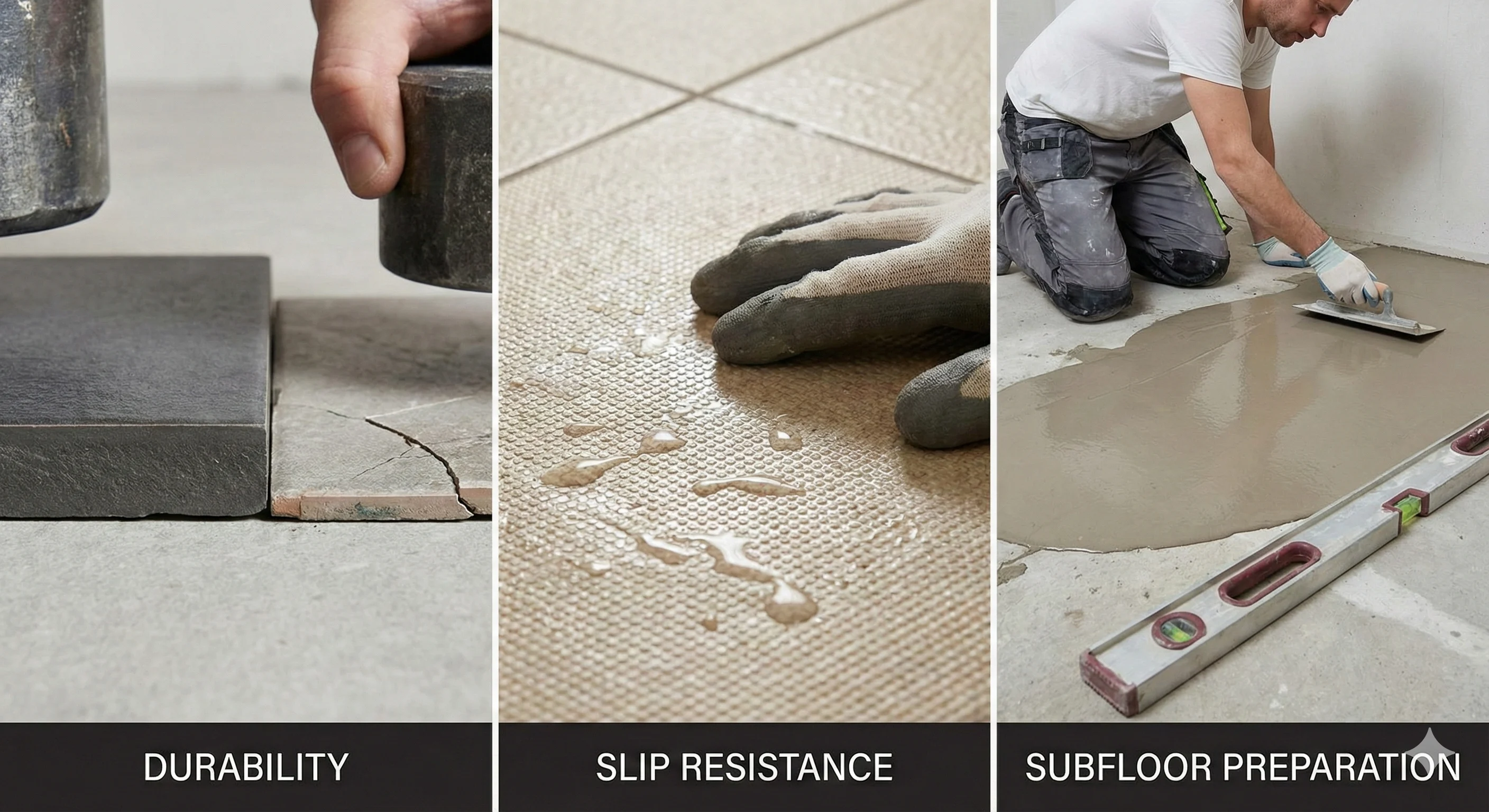
Floor tiles are designed to withstand weight, foot traffic, and occasional impact. They require a higher thickness compared to wall tiles.
-
Standard Thickness: 8mm to 12mm is common for residential floors; commercial spaces may require 12mm to 20mm.
-
Material Consideration: Porcelain and vitrified tiles are ideal for floors due to their density and strength.
-
Usage Areas: Kitchens, living rooms, bathrooms, and outdoor spaces.
Key Considerations for Floor Tiles:
-
Durability: Thicker tiles resist cracks and chipping, especially in high-traffic areas.
-
Slip Resistance: Floor tiles often have textured surfaces for safety.
-
Subfloor Preparation: Thicker tiles may require more leveling or a reinforced subfloor to prevent uneven surfaces.
Floor vs Wall Tiles Thickness: Comparison Table
| Feature | Floor Tiles | Wall Tiles |
|---|---|---|
| Standard Thickness | 8–12mm | 5–7mm |
| Strength | High | Medium |
| Weight | Heavy | Light |
| Suitable For | All flooring | Walls, décor |
| Material Types | Porcelain, vitrified | Ceramic, porcelain |
| Impact Resistance | Strong | Moderate |
How to Choose the Right Tile Thickness
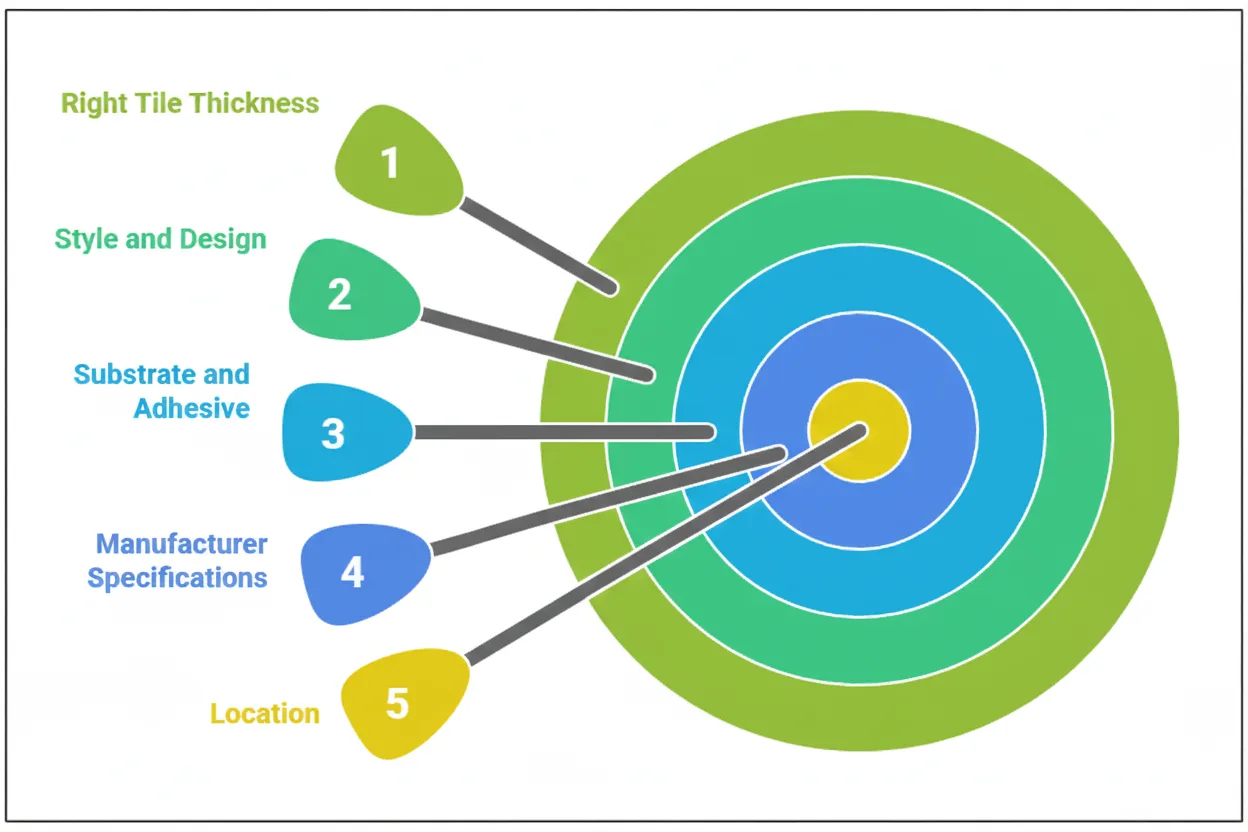
Choosing the correct tile thickness is essential for safety, durability, and aesthetics. Here’s a step-by-step approach:
1. Consider the Location
-
High-Traffic Areas: Opt for thicker floor tiles to prevent cracks.
-
Low-Traffic or Decorative Walls: Thin wall tiles are sufficient.
2. Check Manufacturer Specifications
Always refer to the manufacturer’s recommendations. Some tiles are engineered specifically for walls or floors. Installing a wall tile on the floor can lead to breakage.
3. Factor in Substrate and Adhesive
Tile thickness should complement the surface you’re tiling. Floors often need thicker adhesive layers to support weight, while walls can manage with thinner layers.
4. Think About Style and Design
Thicker tiles may give a more luxurious look, but consider tile height alignment especially when combining floor and wall tiles in the same room.
Tile Thickness Guidelines: Quick Reference
| Tile Type | Recommended Thickness | Usage Area |
|---|---|---|
| Wall Tiles | 6mm – 10mm | Bathrooms, kitchens, feature walls |
| Residential Floor Tiles | 8mm – 12mm | Living rooms, bedrooms, kitchens |
| Commercial Floor Tiles | 12mm – 20mm | Malls, offices, outdoor areas |
How Material Affects Tile Thickness
Different materials have different strength properties, meaning the same thickness can perform differently depending on the material:
- Ceramic: Lightweight, ideal for walls; usually 6–10mm thick. Not ideal for heavy-duty floors.
- Porcelain: Dense and strong; suitable for walls and floors; thickness 8–12mm for floors, 6–10mm for walls.
- Natural Stone (marble, granite, travertine): Heavy and durable; often 10–20mm thick for floors. Requires reinforced subfloors.
- Glass: Thin and decorative; best for wall applications due to fragility.
Tips for Installing Tiles of Different Thicknesses
- Plan for Transitions: When floor and wall tiles meet, account for height differences to prevent uneven edges.
- Use Proper Adhesive: Thicker tiles may require stronger adhesive or mortar for stability.
- Check Tile Flatness: Uneven tiles can lead to cracking or chipping, especially on floors.
- Hire Professionals: Proper installation ensures your floor and wall tiles perform optimally and last longer.
Benefits of Choosing the Right Tile Thickness
- Enhanced Durability: Prevents cracking and wear in high-traffic areas.
- Aesthetic Appeal: Ensures smooth transitions and a polished finish.
- Cost Efficiency: Reduces maintenance and replacement costs over time.
- Safety: Proper thickness prevents accidents due to uneven or weak tiles.
How Liberta Vitrified Ensures Perfect Tile Thickness
Liberta Vitrified focuses on manufacturing tiles with strict adherence to global quality standards. Each tile undergoes precise thickness calibration using advanced machinery. Their production ensures uniformity, strength, and aesthetic appeal in both floor tiles and wall tiles.
Every batch is checked for consistency, ensuring that customers receive tiles that are durable, visually appealing, and installation-friendly. Liberta’s export-ready tiles meet international thickness and tolerance requirements, making them suitable for residential as well as commercial projects.
Conclusion
Choosing the right floor tiles and wall tiles thickness is essential for creating a beautiful, durable, and safe space. While floor tiles require a thicker and stronger build to withstand foot traffic, wall tiles focus more on design and aesthetics. By understanding the recommended tile thickness, considering your space requirements, and using professional installation techniques, you can enjoy a flawless tiling project for years to come.
Remember, the perfect tile is not just about looks it’s about performance, safety, and longevity.
People Also Ask (FAQs)
1. What is the ideal thickness for floor tiles?
For residential use, floor tile thickness ranges between 8mm and 12mm, while commercial areas may need tiles up to 20mm thick.
2. Can wall tiles be used on floors?
Generally, no. Wall tiles are thinner and less durable, making them prone to cracking under heavy foot traffic.
3. How to measure tile thickness accurately?
Use a caliper or tile gauge to measure floor or wall tile thickness. Ensure you account for the grout layer when calculating total height.
4. Does thicker tile mean better quality?
Not always. Thickness is just one aspect. Tile quality depends on material, manufacturing process, and finish.