

Porcelain tiles are widely used for staircases because of their strength, durability, and design flexibility. Whether for residential homes or commercial spaces, they offer both safety and visual appeal. Choosing the right material for stairs is important since this area handles constant foot traffic.
In this guide, you’ll learn how porcelain tile flooring works for staircases, what design options are available, and how to install them properly for long-term performance.
Why Choose Porcelain Tiles for Staircases?
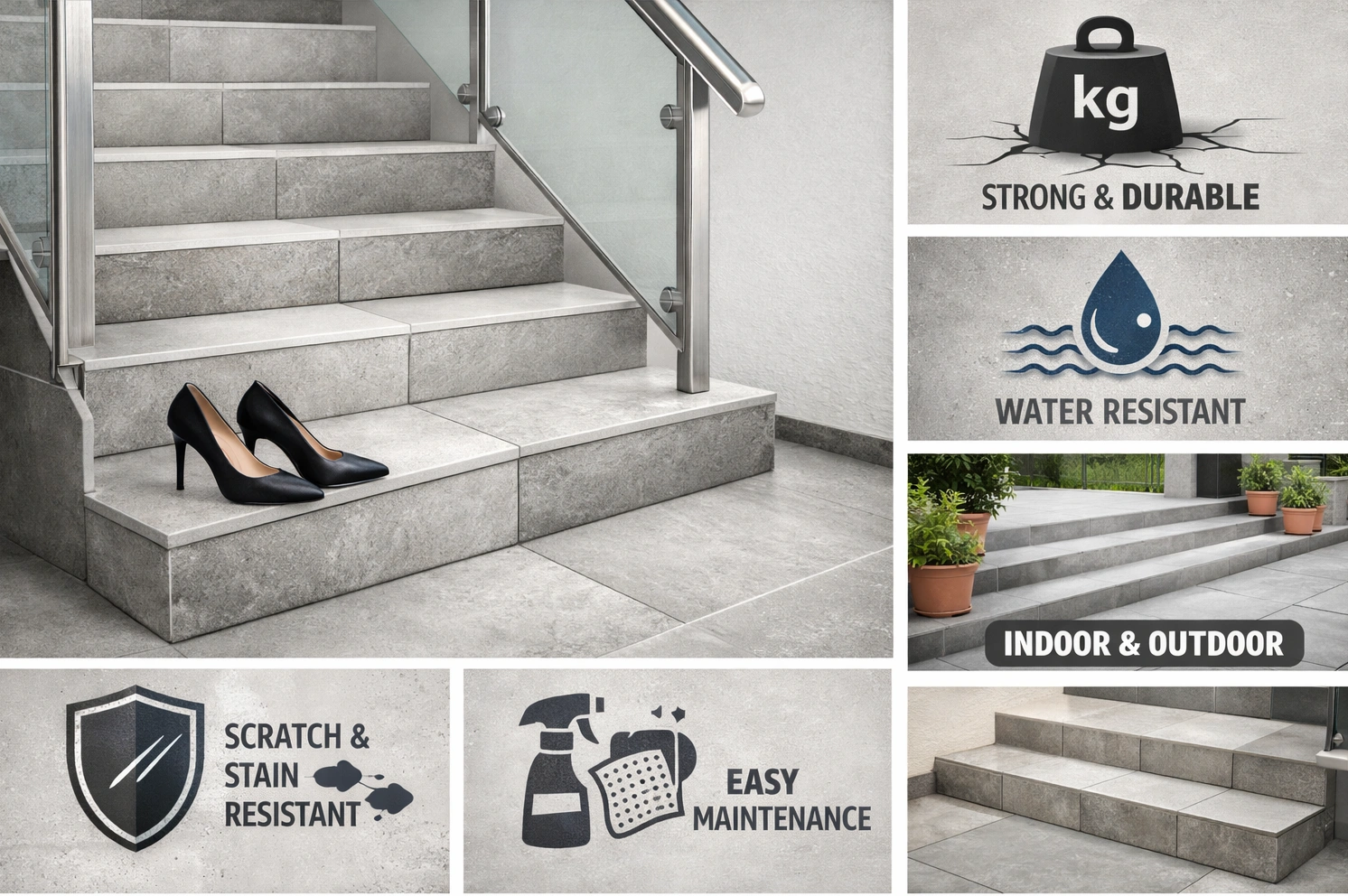
Staircases require materials that can handle impact, friction, and daily wear. Porcelain tiles are manufactured at high temperatures, making them dense and highly durable.
Here’s why they’re ideal for stairs:
-
High load-bearing strength
-
Low water absorption
-
Scratch and stain resistance
-
Suitable for indoor and outdoor use
-
Long service life with minimal maintenance
Compared to traditional ceramic or natural stone, porcelain tiles for staircase applications offer better uniformity and lower maintenance.
Key Design Considerations for Staircase Tiles
Selecting the Right Finish
The finish impacts both safety and aesthetics.
-
Polished porcelain tile gives a sleek, premium look but may require anti-slip treatment.
-
Matte finishes offer better grip for stairs.
-
Textured surfaces are ideal for high-traffic or outdoor staircases.
Choosing the Ideal Tile Size
Tile size affects the visual flow of the staircase.
-
Large format porcelain tile creates a seamless appearance with fewer grout lines.
-
Large porcelain tile options help maintain uniformity across treads.
-
Standard sizes may be easier to cut and install on complex stair designs.
Color & Pattern Coordination
Color selection enhances both safety and style.
-
White porcelain tile makes narrow staircases appear wider and brighter.
-
Black porcelain tile creates bold contrast and modern aesthetics.
-
Marble look porcelain tile adds elegance without the maintenance of natural marble.
-
Wood look tile is perfect for those who prefer a warm, natural appearance without using real wood.
Safety First: Slip Resistance & Stair Nosing
What Is Stair Nosing?
Stair nosing is the protruding edge of each step. It:
-
Improves grip
-
Enhances step visibility
-
Reduces wear on edges
Integrated tile nosing or metal strips can increase safety when installing porcelain tile flooring on stairs.
Recommended Slip Ratings
For staircases, anti-slip ratings are essential.
-
Indoor stairs: Moderate slip resistance
-
Outdoor stairs: Higher R-rating for wet conditions
This ensures that porcelain tiles for staircase use meet safety standards.
Indoor vs Outdoor Staircase Tile Selection

Best for Indoor Stairs
-
Matte or textured finish
-
Coordinated with interior porcelain tile flooring
-
Elegant options like polished or marble-look finishes
Best for Outdoor Stairs
-
Textured surface
-
Frost-resistant material
-
UV-stable finishes
-
Proper slope for drainage
Comparison Table
| Feature | Indoor Stairs | Outdoor Stairs |
|---|---|---|
| Finish | Matte / Polished | Textured / Anti-slip |
| Water Resistance | Standard | High |
| UV Resistance | Not critical | Essential |
| Maintenance | Easy cleaning | Weather-resistant care |
| Recommended Type | Marble look porcelain tile | Textured large porcelain tile |
Installation Tips for Porcelain Tiles on Staircases

Proper installation ensures durability and safety.
Surface Preparation
-
Clean and level the substrate
-
Use high-quality adhesive
-
Ensure correct step measurements
Step-by-Step Installation
-
Measure tread and riser accurately
-
Cut tiles precisely
-
Apply adhesive evenly
-
Fix tread first, then riser
-
Install stair nosing
-
Grout carefully
Common Mistakes to Avoid
-
Ignoring slip resistance
-
Using low-grade adhesive
-
Incorrect overhang measurement
-
Uneven grout lines
Professional installation is recommended, especially when working with large format porcelain tile on staircases.
Maintenance & Long-Term Performance
One of the biggest advantages is their low maintenance requirement.
Cleaning Tips
-
Use mild cleaning agents
-
Avoid harsh chemicals
-
Clean regularly to prevent dirt buildup
Preventing Damage
-
Inspect stair edges periodically
-
Replace damaged tiles promptly
-
Use protective pads in commercial spaces
Proper care ensures porcelain tile flooring on stairs remains visually appealing for years.
Cost Factors & Budget Planning
The total cost depends on:
-
Tile size and thickness
-
Design type (wood look, marble look, polished)
-
Installation complexity
-
Stair nosing and accessories
Although the initial cost may be higher than ceramic options, porcelain tile flooring provides better long-term value due to durability and minimal maintenance.
Porcelain Tiles vs Other Staircase Materials
|
Feature |
Porcelain Tiles |
Ceramic Tiles |
Natural Stone |
|
Durability |
Very High |
Moderate |
High |
|
Slip Resistance |
Customizable |
Limited |
Varies |
|
Maintenance |
Low |
Moderate |
High |
|
Water Absorption |
Very Low |
Higher |
Moderate |
|
Design Variety |
Extensive |
Moderate |
Limited |
Choosing the Right Tile Manufacturer
Selecting the right manufacturer is essential for ensuring durability, safety, and long-term performance in staircase installations. A reliable supplier should offer:
-
Recognized quality certifications (ISO, CE, etc.)
-
Compliance with international export standards
-
A wide design portfolio (matte, textured, marble-look, wood-look, large format)
-
Customization capability for project-specific requirements
-
Strong production capacity and a dependable supply chain
Working with an experienced manufacturer ensures that porcelain tiles used for staircases meet structural strength requirements, slip-resistance standards, and consistent quality benchmarks.
Recommended Manufacturer: Liberta Vitrified
Liberta Vitrified is a global manufacturer and exporter specializing in porcelain and vitrified tile solutions. The company offers collections suitable for staircase applications, including anti-slip finishes, marble-look designs, wood-look surfaces, and large-format options.
With modern production technology and adherence to international quality standards, Liberta Vitrified supplies materials for residential and commercial projects worldwide. Their product range is designed to balance durability, aesthetics, and performance for staircase installations.
Find Porcelain Tiles for Staircases
Conclusion
Staircases demand materials that combine durability, safety, and design appeal. Porcelain tiles offer an excellent balance of strength, style, and low maintenance. By selecting the right finish, size, and installation method, you can achieve a staircase that looks premium and performs reliably.
With proper planning and professional installation, porcelain tile flooring on stairs becomes a long-lasting and visually impressive solution.
FAQs
1. Are porcelain tiles suitable for stairs?
Yes, they are strong, durable, and available in anti-slip finishes, making them ideal for staircases.
2. What thickness is best for staircase tiles?
Typically, 8–12 mm thickness works well, depending on usage and traffic levels.
3. How can porcelain stairs be made less slippery?
Choose matte or textured finishes and add stair nosing for better grip.
4. Can porcelain tiles crack on stairs?
When installed correctly on a stable base, they are highly resistant to cracking.
5. Are they suitable for outdoor staircases?
Yes, especially textured and frost-resistant options designed for exterior use.