Choosing tiles for a new project involves more than finding an attractive colour or pattern. Importers, developers and contractors must also review tile type, finish, water absorption, expected traffic and installation conditions.
India is a well-known production base for ceramic, porcelain and vitrified tiles. Buyers can source products for homes, offices, shops, hotels and other developments. Liberta Vitrified is a potential wall and floor tiles manufacturer in India for buyers seeking product information and export quotations.
This guide explains how to compare wall and floor tiles for El Salvador, including technical checks, finishes, applications, packing and shipment planning.
What Tiles Does the El Salvador Market Need?
Tiles for Homes and Commercial Spaces
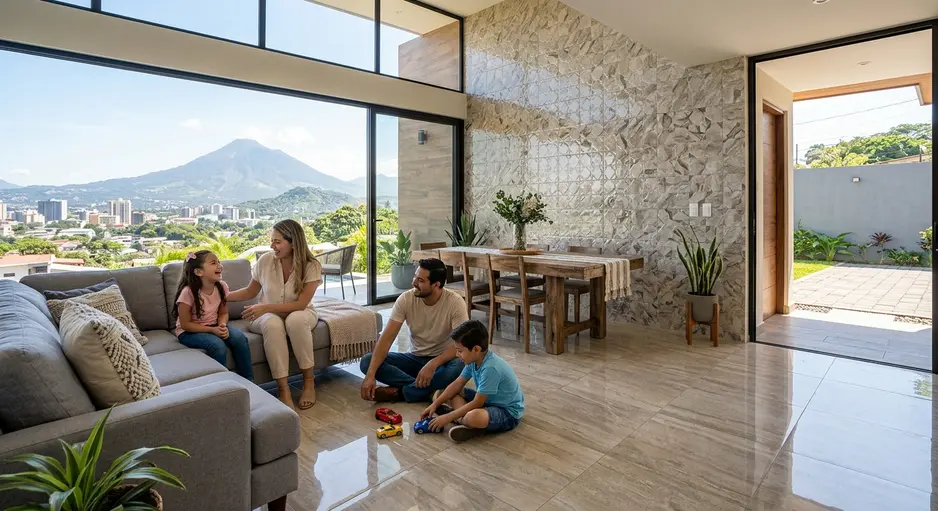
Residential projects may need tiles for bathrooms, kitchens, bedrooms, living rooms, balconies and patios. Each area has different needs. A bathroom floor may require more grip, while a living room may focus on appearance and easy cleaning.
Commercial spaces often face heavier foot traffic. Shops, restaurants, offices, hotels and public areas need surfaces that are easy to maintain. Buyers may also need to consider abrasion, stains, cleaning chemicals and replacement stock.
When selecting tiles for homes and commercial spaces, match the product to the expected use. A decorative wall tile should not be assumed to work on a busy floor. In the same way, an indoor floor tile may not be suitable for an exposed outdoor area.
Climate and Project Conditions
Warm, humid and rainy conditions can affect material selection and installation. Low water absorption may be important for areas exposed to moisture. Stain-resistant tiles and easy-to-clean surfaces can also reduce maintenance in busy properties.
Outdoor areas need careful planning. The tile, adhesive, substrate, drainage slope and grout system must work together. An outdoor-rated product can still fail when the base is uneven or water cannot drain correctly.
Ceramic, Porcelain and Vitrified Tile Options
Ceramic Wall Tiles for Interior Areas
Ceramic wall tiles are commonly considered for bathroom wall applications, kitchen backsplashes and feature walls. Their glazed tile surfaces can provide a wide choice of colours and designs. They are also simple to clean when installed and maintained correctly.
Buyers should check whether a product is rated only for walls. Wall tiles may be lighter or made for lower loads. They should not be used as floor tiles unless the manufacturer confirms that the product is suitable for that purpose.
Porcelain Floor Tiles for High-Use Spaces
Porcelain floor tiles usually have a dense body and low water absorption. They are often selected for kitchens, living areas, offices, retail floors and other high-use locations.
Not every porcelain product has the same performance. Buyers should review the finish, breaking strength, abrasion rating and slip-resistance information for the exact model. Outdoor suitability should also be confirmed rather than assumed.
Vitrified Tiles for Durable Flooring
Vitrification uses heat to create a dense and compact tile body. Vitrified tiles are often considered when a project needs durable flooring material with a consistent surface. Product options may include glazed, matte and polished variants.
The correct choice depends on where the tile will be installed. A polished surface may suit a dry reception area, while a matte or textured option may be more practical for an entrance or kitchen.
Large Format Tile Designs
Large format tiles can create visual continuity and reduce the number of grout joints. They are popular in modern homes, hotel interiors, reception spaces and commercial developments.
However, larger tiles need careful handling and installation. The substrate must be sufficiently flat, and installers must achieve suitable mortar coverage. Levelling systems, movement joints and suitable adhesives may also be required. Strong packaging and edge protection are important during export.
How Do You Choose the Right Tile Finish?
Matte Tile Finish for Wet and Busy Areas
A matte tile finish is often considered for bathrooms, kitchens, entrances and selected outdoor spaces. It can hide light marks better than a highly reflective surface and may create a softer look.
Matte does not always mean slip-resistant. Request the relevant test result for the selected tile, especially for floors exposed to water. The project designer should also consider footwear, slope, drainage and cleaning practices.
Polished Tile Finish for Premium Interiors
A polished tile finish reflects light and can make an interior feel open and bright. It is often used in living rooms, dry hotel interiors, showrooms and reception areas.
Polished surfaces may show footprints, dust or smudges more clearly. They can also require extra care in wet locations. Buyers should confirm the intended use before specifying polished products for floors.
Glazed and Textured Surfaces
Glazed surfaces provide decorative variety and can be easy to maintain. Textured products may offer added grip for transition areas, entrances or covered outdoor spaces. More texture can also make cleaning harder, so the finish should balance safety and maintenance needs.
Why Rectified Tile Edges Matter
Rectified tile edges are mechanically finished to create more consistent dimensions. They can support clean alignment and narrow, even grout joints in contemporary interiors.
Rectified products should not be installed without joints. Suitable grout spacing is still needed to manage tile variation, movement and installation tolerances.
Which Tiles Work Best for Each Project?
Wall Tiles for Residential Projects
Wall tiles for residential projects may be used on bathroom walls, kitchen backsplashes, utility areas and decorative features. Buyers should consider cleaning needs, stain resistance, shade consistency and coordination with nearby flooring.
For bathrooms, the selected tile should work with the waterproofing, adhesive and grout system. In kitchens, surfaces should be easy to wipe and able to handle common household stains.
Floor Tiles for Commercial Projects
Floor tiles for commercial projects need to match the expected traffic. A small office and a busy retail entrance may require different specifications.
Commercial buyers should review:
- Expected foot traffic and point loads
- Abrasion and scratch resistance
- Stain and chemical resistance
- Slip resistance in dry and wet conditions
- Cleaning and maintenance needs
- Availability of replacement stock
Scratch resistant surfaces can support long-term appearance, but no tile is immune to damage. Grit control, entrance mats and suitable cleaning tools remain important.
A Practical Mixed-Use Example
Consider a project with apartments above a commercial ground floor. Ceramic wall tiles could be selected for apartment bathrooms. Matte porcelain could be used in kitchens and shared corridors. Polished tiles may suit a dry reception area, while textured porcelain may be considered for covered transition spaces.
This is only a planning example. Final specifications should be reviewed by the architect, installer or technical consultant responsible for the project.
Why Source Wall and Floor Tiles from India?
Choice for Different Design Concepts
Indian tile sourcing can give importers access to designs inspired by marble, natural stone, concrete, wood and simple modern surfaces. Buyers can compare coordinated wall and floor options across various sizes and finishes.
This range can help distributors serve several market segments. It can also support developers who need different products for apartments, retail areas and shared spaces within one project.
Planning Wholesale and Project Orders
Container-based sourcing can be useful for distributors and large construction projects. Depending on the exporter’s current services, buyers may ask about mixed designs, custom carton markings, private-label packaging and order consolidation.
A tile export company to El Salvador should provide clear information about product availability, order quantities, lead time and packaging. These points must be confirmed before an order is approved.
Value Is More Than the Unit Price
Buyers sourcing tiles for construction projects in El Salvador should compare equivalent specifications. A low factory price may not offer good value if shade variation, weak packing or high breakage leads to extra costs.
Consider product consistency, technical performance, export packing, communication and landed cost. This gives a more accurate comparison than the price per square metre alone.
How Are Tiles Exported from India to El Salvador?
Product and Sample Approval
Start by confirming the tile type, size, colour, surface and intended application. Request physical samples when possible. The approved reference should show the expected design, finish and edge quality.
Ask how shade and calibre are controlled between batches. Technical information and available test reports should also be reviewed. ISO 13006 classifications and the ISO 10545 test series may be relevant when comparing dimensions, water absorption, strength, abrasion and stain resistance.
Export Packaging and Container Planning
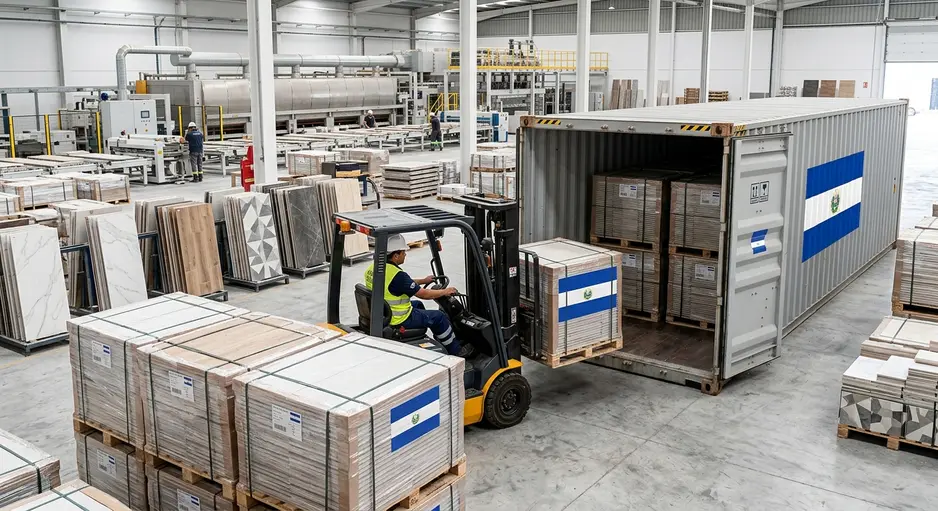
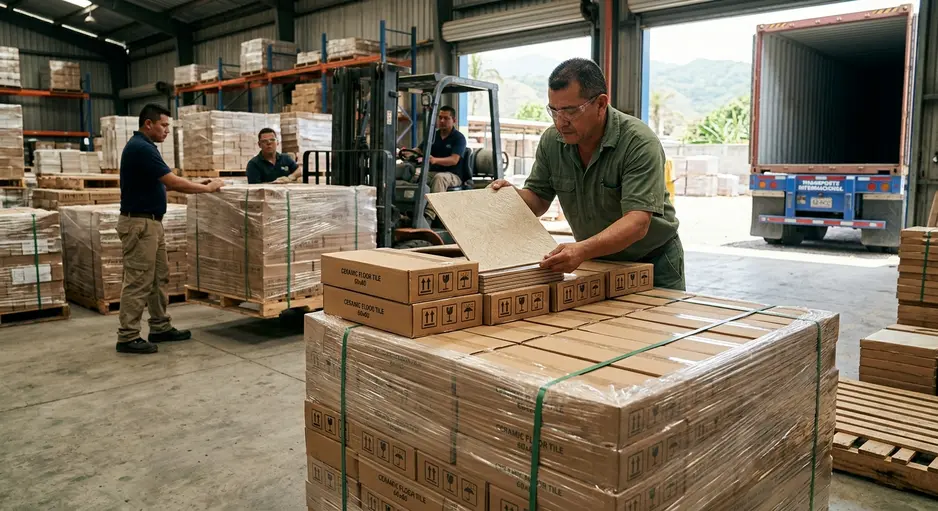
Tiles should be packed in strong, clearly marked cartons. Labels may include size, finish, shade, calibre and batch details. Depending on the order, cartons may be secured on pallets or loaded through another agreed method.
Large format products often need extra edge and corner protection. The exporter should also plan container weight, load distribution and carton stability. These steps can reduce movement and damage during the journey.
Common Export Documents
Documents may vary by shipment, product type and trade terms. Common records include:
- Commercial invoice
- Packing list
- Bill of lading
- Certificate of origin
- Insurance documents when applicable
- Requested product or test documents
- Customs and shipping declarations
The Salvadoran importer and customs broker should confirm the current tariff classification, duties, taxes and documentation before shipment. Requirements can change based on the HS subheading and shipment date.
Pre-Shipment Quality Checklist
- Verify tile dimensions and thickness.
- Review surface appearance and edge quality.
- Confirm shade and calibre consistency.
- Check quantities and carton markings.
- Inspect carton, pallet and protection quality.
- Record loading through photos or inspection reports.
- Keep reference samples from the approved batch.
How to Select a Reliable Tile Supplier
Questions to Ask Before Ordering
- Can you provide a current catalogue and technical sheets?
- Which test results are available for the selected product?
- What is the minimum order quantity?
- What is the expected production lead time?
- Can designs, sizes or finishes be consolidated?
- How are shade and calibre controlled?
- What is the process for reporting transit damage?
- Which Incoterms can be quoted?
- Is custom or private-label packaging available?
A dependable wall and floor tiles supplier in El Salvador should help the buyer understand both product cost and local delivery needs. When buying directly from India, the importer should also assess export experience and response times.
Compare the Full Landed Cost
Landed cost can include the product price, transport within India, export handling, ocean freight, insurance, customs charges, taxes, broker fees and local delivery. Buyers should also allow for cutting waste, installation losses and future replacement stock.
Contacting Liberta Vitrified
Buyers can contact Liberta Vitrified through its official website to request the latest catalogue, product specifications, sizes, finishes, sample options, packing details and an export quotation. Current capabilities, certifications, production schedules and order terms should be confirmed directly before purchase.
Wall and Floor Tiles Manufacturer & Exporter to El Salvador
Plan Your Tile Order with Confidence
Successful tile sourcing begins with the right specification. Buyers should compare application needs, water absorption, surface finish, slip resistance, packaging and total landed cost before placing an order.
Working with an experienced wall and floor tiles exporter to El Salvador can simplify product selection and shipment planning. Contact Liberta Vitrified to discuss ceramic, porcelain or vitrified tile requirements. Request verified specifications, samples, packaging details and a quotation based on your preferred sizes, finishes and order volume.
Frequently Asked Questions
1. What is the difference between ceramic and porcelain tiles?
Porcelain generally has a denser body and lower water absorption than standard ceramic tile. Ceramic is widely used for interior walls, while porcelain is often selected for flooring. The correct application still depends on the exact product specification and test results.
2. Are porcelain floor tiles suitable for El Salvador?
Porcelain tiles can suit residential and commercial floors due to their density and low water absorption. Buyers must still check the finish, traffic level, slip resistance and installation conditions. Not every porcelain tile is designed for outdoor or heavy commercial use.
3. Which tile finish is best for bathrooms and kitchens?
Matte or textured products are often considered for floors where more grip is needed. Glazed ceramic products are common on walls. The final choice should account for slip testing, drainage, cleaning needs and whether the area is regularly wet.
4. Are large format tiles suitable for commercial projects?
Yes, when the substrate is flat and skilled installers use suitable adhesives, mortar coverage, levelling methods and movement joints. Handling and packing also need extra care because large pieces can be harder to lift and transport.
5. How can importers reduce tile breakage?
Use strong export cartons, edge protection, secure palletization and balanced container loading. Inspect the packaging before dispatch and keep a loading record. Large products may need specialized handling at the factory, port and project site.