


Double charge tiles are one of the most preferred flooring options for spaces that demand durability, strength, and long-term performance. These tiles are specially designed to handle heavy foot traffic while maintaining their appearance for years. Commonly used in both residential and commercial spaces, double charged vitrified tiles combine advanced manufacturing technology with practical design benefits. If you are looking for reliable, long-lasting flooring, understanding this type of flooring will help you make an informed decision.
What Are Double Charge Tiles?
Definition of Double Charged Vitrified Tiles
Double charge tiles, also known as double charged vitrified tiles, are produced by pressing two layers of pigment into the tile body during manufacturing. The top layer, which is around 3–4 mm thick, contains the design and color, making the tile highly resistant to wear. Because of this thick surface layer, these tiles last significantly longer than standard vitrified tiles.
Manufacturing Process
The manufacturing process involves:
-
High-pressure hydraulic presses
-
Dual pigment charging before firing
-
High-temperature kiln firing for vitrification
This process ensures uniform color depth, excellent strength, and minimal surface wear, even in high-traffic areas.
Key Features

These tiles are known for their robust construction and functional benefits:
-
Thick wear layer for extended lifespan
-
High load-bearing capacity
-
Scratch and stain resistance
-
Low water absorption
-
Uniform surface finish
-
Suitable for heavy-duty flooring
These features make double charge floor tiles a practical choice for long-term use.
Comparison with Other Tile Types
Comparison with Full Body Vitrified Tiles
Double charged vitrified tiles have a thicker design layer, while full body vitrified tiles have uniform composition throughout. Full body tiles are ideal for extreme abrasion, but this flooring option offers a better balance of cost and durability.
Comparison with Glazed Vitrified Tiles
Glazed vitrified tiles focus more on surface design and digital prints. In contrast, these vitrified tiles prioritize strength and longevity over decorative detailing.
Comparison with Ceramic Tiles
Ceramic tiles are suitable for light residential use, whereas this flooring category is designed for high-traffic and commercial environments.
Advantages and Limitations
Advantages
-
Extremely durable for heavy foot traffic
-
Cost-effective compared to full body vitrified tiles
-
Long-lasting surface design
-
Easy maintenance
-
Ideal for commercial flooring
Limitations
-
Limited design flexibility compared to glazed tiles
-
Not ideal for intricate digital patterns
-
Mostly available in standard textures
Applications
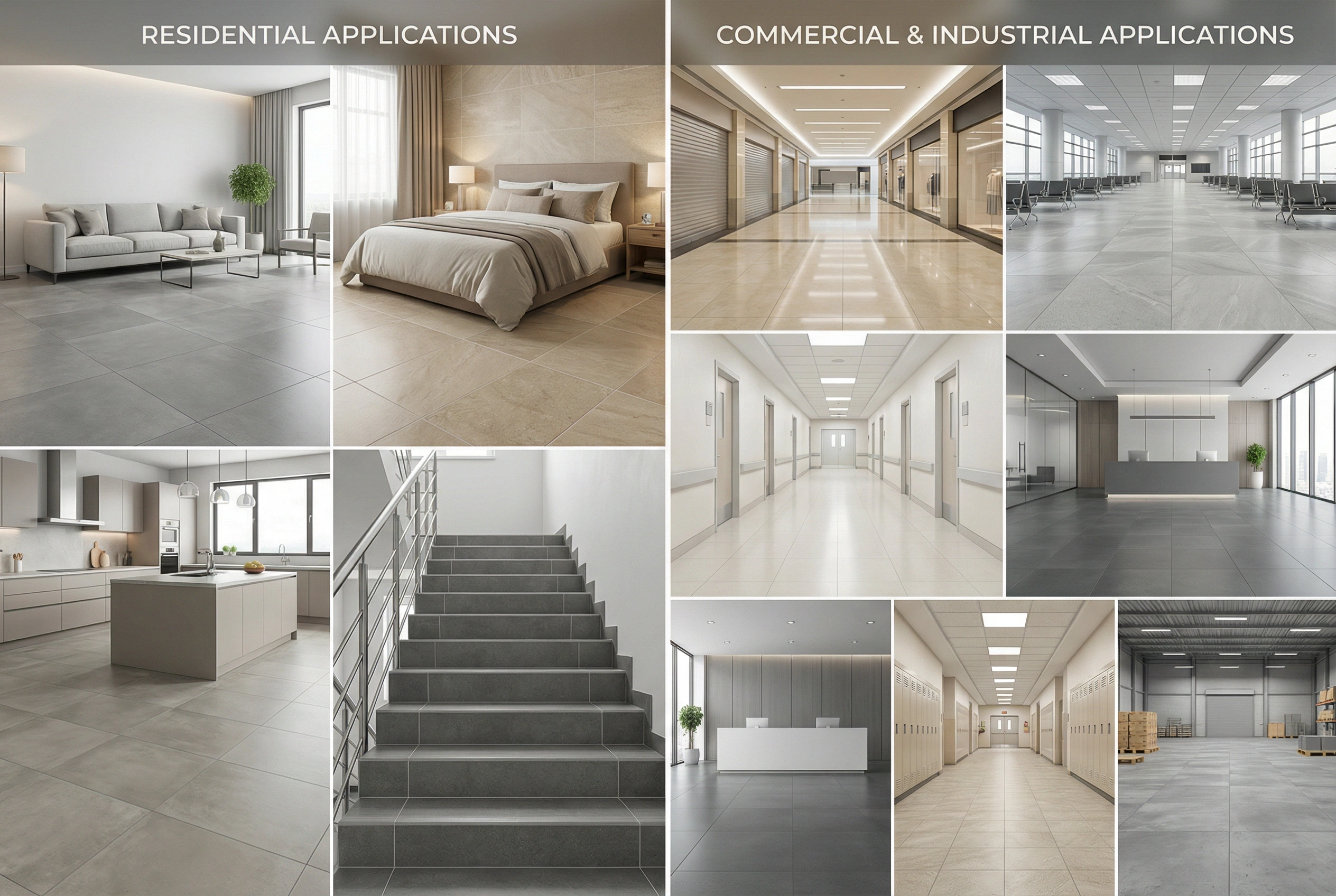
Residential Applications
These tiles work well in:
-
Living rooms
-
Bedrooms
-
Kitchens
-
Staircases
They provide a strong flooring base while maintaining a clean and professional look.
Commercial & Industrial Applications
These tiles are widely used in:
-
Shopping malls
-
Airports
-
Hospitals
-
Corporate offices
-
Educational institutions
Their durability makes them suitable for spaces with constant movement.
Sizes, Finishes, and Thickness Options
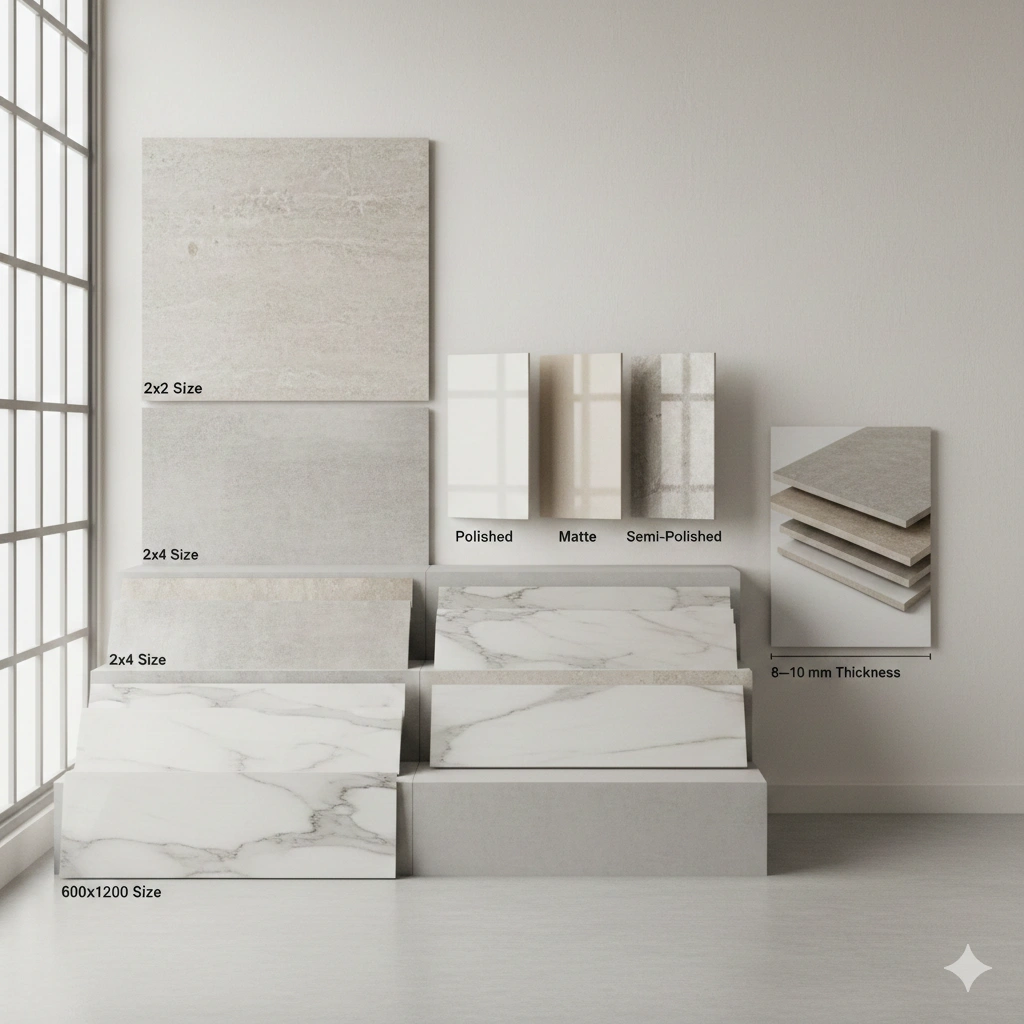
Modern double charge tiles design focuses on durability with subtle aesthetics. These tiles are commonly available in stone, cement, and marble-inspired patterns that suit commercial and contemporary residential spaces. While design variety is more limited than glazed tiles, these tiles offer timeless finishes that remain visually consistent even after years of heavy use.
-
2x2 double charge tiles: Popular for large commercial halls
-
2x4 double charge tiles: Ideal for expansive floor layouts
-
600x1200 double charge tiles: Modern size for contemporary spaces
Common finishes include:
-
Polished
-
Matte
-
Semi-polished
The standard thickness usually ranges between 8 mm and 10 mm, depending on application needs.
Table Section – Double Charged Vitrified Tiles Comparison
|
Feature |
Double Charged Vitrified Tiles |
Glazed Vitrified Tiles |
Full Body Vitrified Tiles |
|
Wear Layer Thickness |
Thick (3–4 mm) |
Thin glazed layer |
Uniform body |
|
Durability |
Very High |
Moderate |
Very High |
|
Design Variety |
Limited |
High |
Low |
|
Ideal Usage |
Heavy traffic areas |
Decorative spaces |
Industrial areas |
|
Cost |
Medium |
Medium |
High |
How to Choose the Right Tiles
Factors to Consider Before Buying
When selecting these tiles, consider:
-
Foot traffic level
-
Area of installation
-
Required tile size and finish
-
Budget and long-term value
Choosing the best double charged vitrified tiles depends on matching technical performance with practical needs.
Maintenance and Care Tips
Maintaining these tiles is simple and hassle-free:
-
Regular sweeping to remove dust
-
Wet mopping with mild detergent
-
Avoid harsh chemicals or abrasive cleaners
-
Use floor mats in high-impact zones
With proper care, these tiles retain their finish for many years.
Why Choose These Tiles for Long-Term Flooring
This flooring solution offers an excellent balance between durability, cost, and performance. Compared to other tile options, it delivers consistent results in high-traffic environments. Their ability to withstand wear makes them a preferred solution for commercial and large residential projects.
Premium Double Charge Tiles by Liberta Vitrified
Liberta Vitrified manufactures premium-quality double charge tiles designed for strength, durability, and global standards. Their product range includes multiple sizes, finishes, and performance-focused designs suitable for residential, commercial, and architectural projects. With advanced manufacturing facilities and strict quality control, Liberta Vitrified ensures reliable flooring solutions that meet international export requirements while delivering long-term value.
Conclusion
These tiles are an excellent flooring solution for anyone seeking durability and long-lasting performance. From commercial complexes to modern homes, they provide strength, consistency, and easy maintenance. By understanding their features, applications, and limitations, you can confidently select the right tile option for your project and ensure value for years to come.
FAQs – People Also Ask
1. Are double charge tiles good for heavy traffic areas?
Yes, they are specifically designed to handle high foot traffic without surface wear.
2. What is the thickness of double charge tiles?
The standard thickness usually ranges between 8 mm and 10 mm, depending on application needs.
3. Are double charge tiles better than glazed vitrified tiles?
They are better for durability, while glazed tiles are better for decorative designs.
4. Can double charge tiles be used in homes?
Yes, especially in living rooms, kitchens, and high-usage areas.