


Wood-look porcelain brings the warmth of timber to spaces where natural wood may need more care. It works well in Brazilian homes, hotels, offices, shops, and other projects when the right technical grade is selected. This guide explains designs, finishes, applications, installation, export packing, and supplier checks. If you are comparing a wood look tile supplier to Brazil or a wood look tile exporter to Brazil, request current sizes, samples, technical data, minimum order quantities, and export pricing before you decide.
Why Are Wood Look Tiles Popular in Brazil?
Natural Timber Appearance with Porcelain Performance
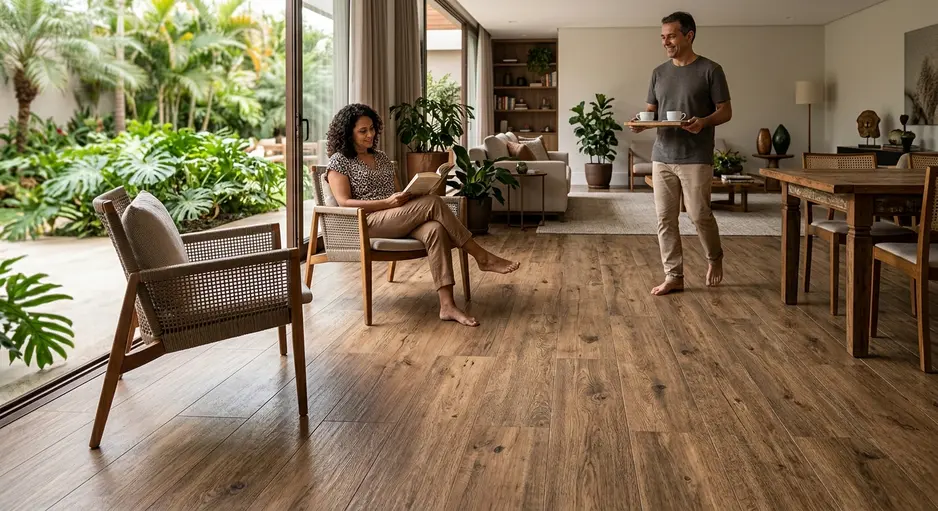
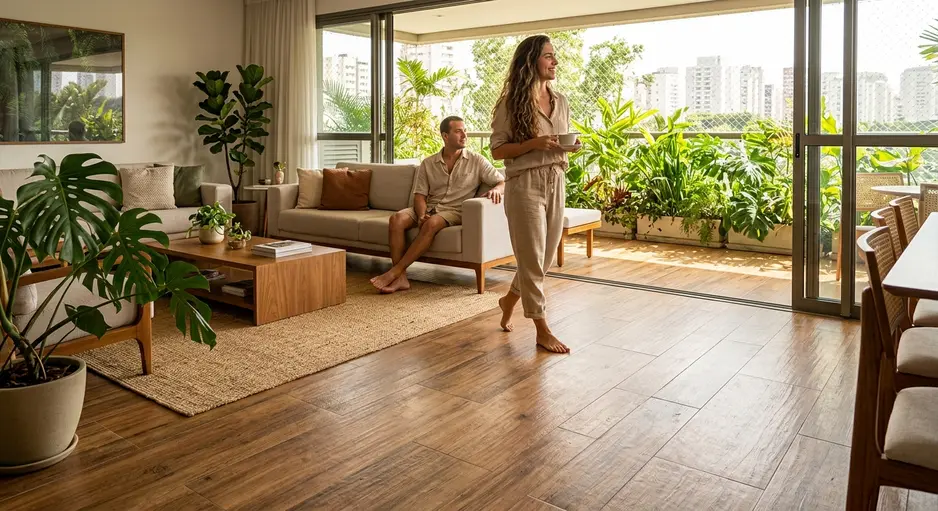
Modern printing and surface-detailing methods can recreate grain lines, knots, tonal shifts, and weathered effects. Popular visual directions include light oak, honey wood, walnut, rustic brown, grey timber, and aged planks. A detailed wood grain tile texture can also add depth when viewed under natural or indoor light.
The most convincing floors do not depend on color alone. Buyers should compare the number of unique design faces, shade variation, plank proportions, surface relief, edge quality, and grout color. These details help create a more natural timber appearance across a large area.
A Durable Alternative to Natural Wood
Porcelain does not need polishing in the same way as many timber surfaces. It can also be easier to clean after routine spills. This makes it a practical option for kitchens, corridors, reception areas, and other busy spaces.
However, performance varies by product. Moisture resistance, abrasion resistance, and stain resistance must be checked through technical data. A suitable porcelain product can provide easy maintenance flooring and serve as a durable alternative to natural wood, but no surface should be described as damage-proof without test evidence.
Which Wood Look Porcelain Tiles Should Buyers Choose?
Plank Format Tiles and Room Proportions
Plank format tiles create the long lines linked with timber flooring. Narrow planks can suit smaller rooms or detailed layouts. Wider and longer formats can create a calm, open look, although they require careful handling and a flat substrate.
Before ordering, confirm the exact dimensions, thickness, caliber, finish, carton quantity, and pallet details. Brazilian importers should also ask whether modular formats can be combined within one collection. This helps designers plan transitions between rooms and reduce awkward cuts.
Matte, Textured, and Glazed Surfaces
A matte tile finish often creates an understated look in living rooms, bedrooms, and offices. A textured tile surface can add tactile detail and make grain effects more visible. A glazed porcelain surface allows a broad range of decorative colors and patterns.
Finish names alone do not show whether a tile is suitable for wet or exterior areas. Matte does not always mean slip-resistant. Ask for the test method and declared result when slip performance matters, especially for bathrooms, balconies, entrances, and poolside areas.
Rectified Edges and Grout Joints
Rectified tile edges can support neat, consistent joints when the substrate and installation are well prepared. Even so, tiles should not be installed with a zero-width joint. Follow the manufacturer’s joint guidance and the standards that apply to the project.
A grout color close to the main timber shade can make the surface appear more continuous. A contrasting color gives each plank a stronger outline. Buyers should evaluate both choices with a dry layout before approving the final specification.
Technical Details to Request
- Water absorption: Request a laboratory report and product classification.
- Surface finish: Review a physical sample under different lighting.
- Slip performance: Ask for the test method and declared result.
- Shade variation: Review several faces and a larger sample board.
- Rectification: Confirm size, caliber, and dimensional tolerance.
- Graphic faces: Ask how many unique patterns are included.
Where Can Wood Look Tiles Be Used?
Wood Look Tiles for Residential Projects
Wood look tiles for residential projects may be considered for living rooms, bedrooms, kitchens, corridors, bathrooms, and feature walls. They can create a coordinated floor-to-wall design without using the same material throughout every part of the room.
Each application needs a suitable specification. For example, bathroom floors require attention to water exposure and slip performance. Kitchen floors need practical cleaning and stain characteristics. Wall installations require the correct adhesive, substrate preparation, and support for the tile weight.
Wood Look Tiles for Commercial Projects
Hotels, cafes, restaurants, stores, offices, apartment developments, and reception areas often use timber-inspired surfaces to create a welcoming setting. Products for these spaces should be selected according to foot traffic, cleaning routines, entrance dirt, furniture movement, and expected service conditions.
For wood look tiles for commercial projects, buyers should request relevant strength and surface-resistance information. A design that works in a quiet bedroom may not be the right choice for a busy retail entrance.
Can Wood Look Tile Be Used Outdoors?
Yes, but only when the product is approved for the intended exterior use. Review water absorption, slip performance, drainage, substrate design, weather exposure, and installation requirements. These checks are important for patios, balconies, walkways, and other outdoor tile applications.
A wood visual does not make a product suitable for outdoor use. The technical grade and finish must match the location. Pool surrounds and uncovered areas may need different performance from a sheltered balcony.
How Do You Evaluate a Wood Look Tile Manufacturer?
Check Technical Data, Not Only Catalogue Images
A catalogue is useful for shortlisting colors, yet it cannot confirm performance. Ask for a product data sheet, water-absorption results, dimensional tolerances, breaking strength, surface-resistance data, stain and chemical resistance, and relevant slip test results.
Terms such as low water absorption, scratch resistant tile surface, and stain resistant flooring should be supported by product-specific reports. Buyers should also confirm shade codes, caliber details, batch identification, and carton markings.
Inspect Samples and Pattern Variation
- Place several planks together rather than viewing one piece.
- Check pattern repetition across samples or multiple cartons.
- Compare the design in daylight and artificial light.
- View the surface from standing height.
- Confirm how production batches and tones are identified.
- Ask about matching trims or complementary wall tiles if needed.
Assess Production and Export Capability
A dependable wood look tile manufacturer in India should give clear answers about minimum order quantity, samples, current production lead time, packaging, loading, inspection, documentation, and claim procedures. If private-label packing is required, confirm its availability before approving artwork or placing an order.
What Makes an Export Tile Supplier Reliable?
Reliability comes from consistent batches, traceable testing, realistic schedules, clear communication, and export-safe packing. A responsible supplier should explain what can be delivered without making vague performance promises. Written product approvals and purchase terms also protect both parties.
What Should Brazilian Importers Know About Compliance?
Standards and Product Classification
Importers should confirm the Brazilian and international standards that apply to the exact product and application. ISO 13006 and relevant ABNT requirements may help guide ceramic tile classification and testing. Current conformity requirements should also be checked before shipment.
The word “porcelain” should relate to measurable characteristics rather than marketing language alone. Request current reports from a recognized laboratory and check whether the tested reference matches the product being purchased.
NCM Codes and Shipping Documents
Common shipment documents can include a commercial invoice, packing list, bill of lading, certificate of origin when applicable, insurance papers, and agreed inspection records. Test reports or wood-packaging documents may also be needed in certain cases.
NCM classification, taxes, import licensing, and customs requirements can change. Confirm them with a qualified Brazilian customs broker or trade professional before making payment or booking freight.
Export Packaging for Long-Distance Transport
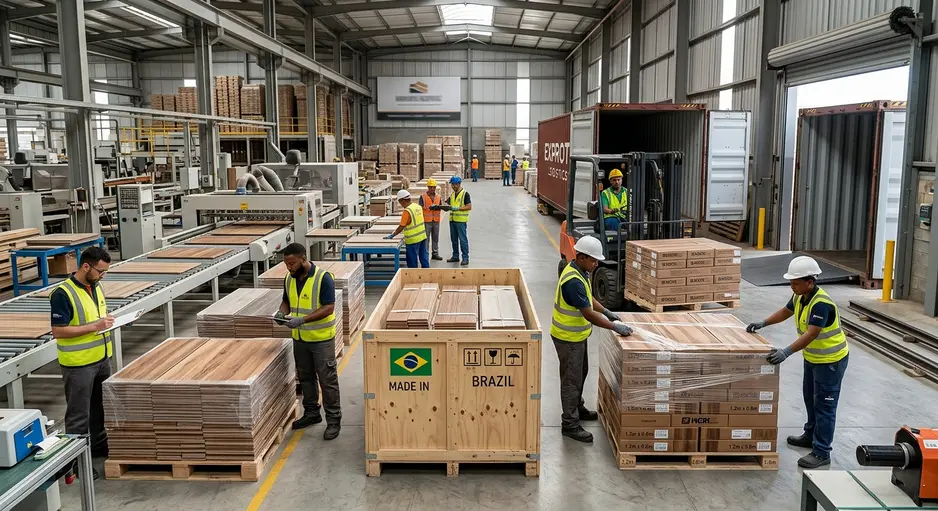
Good packing reduces avoidable damage during handling and sea transport. Discuss reinforced cartons, pallet condition, corner protection, strapping, wrapping, carton labels, moisture protection, and weight distribution inside the container.
Shade, caliber, format, and quantity should be easy to identify. Pre-dispatch photographs and inspection records can help verify packing before the container leaves the factory.
Installation Tips for a Realistic Timber Effect
Avoid Excessive Offset with Long Planks
Long tiles may have permitted curvature within the applicable tolerance. A large stagger can place higher and lower points beside each other, making lippage more visible. Follow the recommended offset and local installation guidance instead of assuming that a half-plank pattern is suitable.
Plan the Layout Before Fixing
- Open and mix tiles from several cartons.
- Dry-lay part of the area to find repeated patterns.
- Rotate or reposition planks for a varied effect.
- Check and correct substrate flatness.
- Use adhesive suited to the tile, substrate, size, and location.
- Maintain the specified grout and movement joints.
- Protect the completed surface during later construction work.
Are Wood Look Tiles Easy to Maintain?
Routine care normally includes sweeping or vacuuming, followed by cleaning with a suitable neutral product. Avoid waxes, harsh chemicals, or abrasive tools unless the tile and grout manufacturers approve them. Deep surface relief may need more focused cleaning than a smooth finish.
Why Source Wood Look Tiles from India?
Design Choice and Export Planning
Indian sourcing can give buyers access to different timber colors, plank proportions, graphic effects, and porcelain options. Depending on the supplier’s current offer, buyers may also discuss coordinated wood look floor tiles, wood look wall tiles, and packaging for a target market.
An experienced Indian tile exporter to Brazil should provide a clear quotation with Incoterms, product details, packing specifications, sample approval steps, and production updates. Buyers should confirm every service rather than assume that customization or mixed loading is available.
Working with Liberta Vitrified
Brazilian distributors and project buyers can contact Liberta Vitrified to ask about its current selection, available formats, finishes, technical documents, samples, MOQ, packing, and quotation terms. These details should be verified directly for each order.
When evaluating Liberta Vitrified as a wood look tile supplier to Brazil or wood look tile exporter to Brazil, share the project location, application, required quantity, target finish, and expected delivery terms. This allows the company to confirm whether suitable wood look tiles for flooring and walls are available.
Get Started with Wood Look Tile Manufacturer & Supplier to Brazil
Choose the Right Tile and Export Partner
Successful wood-look projects begin with more than an attractive design. Buyers need a suitable finish, verified technical performance, controlled batches, careful installation, and secure export packing. Samples and written specifications make it easier to compare offers fairly.
For a Brazilian distribution or construction project, contact Liberta Vitrified to request its current product options, technical details, sample process, MOQ, and export quotation. Confirm all product and shipment requirements before placing the final order.
Frequently Asked Questions
1. Is wood look porcelain tile better than natural wood?
Neither material is best for every project. Porcelain may offer easier cleaning and better moisture tolerance, while natural wood offers warmth and can sometimes be repaired or refinished. Compare appearance, installation, comfort, maintenance, moisture exposure, and long-term use.
2. Are wood look tiles suitable for Brazilian bathrooms?
They can be suitable when the specific tile and finish are approved for the intended floor or wall. Check slip performance, drainage, water exposure, grout, substrate preparation, and installation instructions before selection.
3. Can wood look floor tiles be installed on walls?
Some floor tiles can also be used on walls. The installer must check tile weight, substrate capacity, adhesive coverage, fixing method, joint requirements, and the manufacturer’s guidance. Large planks may require extra handling and support.
4. What is the best finish for outdoor wood look tiles?
There is no single best finish. Choose timber effect porcelain tiles designed for the actual exterior setting, with verified water absorption, slip performance, weather suitability, and installation guidance.
5. What tile size creates the most realistic wood effect?
Long planks often create a strong timber look, but the best size depends on room dimensions, pattern variation, substrate flatness, layout, handling, and installer skill. A proportional format usually gives a more balanced result.