


Greek tile buyers often want the warm look of timber without the care needs of natural wood. This makes large-format wood-look tiles an appealing choice for homes, hotels, shops, and modern offices. Choosing a reliable 600×1200 mm wood porcelain tiles exporter to Greece, however, involves more than reviewing colours and prices.
Importers, dealers, architects, and project buyers must also assess technical data, finish quality, packing, order terms, and delivery planning. This guide explains what to check when sourcing tiles from Liberta Vitrified. It also covers common applications, product comparisons, documentation, and the questions to ask before placing a bulk order.
Why Greece Is Choosing 600×1200 Wood Tiles

Natural Wood Grain Porcelain Tiles for Modern Interiors
Wood-look tiles bring natural tones and grain-inspired detail into a space. Modern digital surface designs can recreate the visual character of timber while keeping the practical qualities associated with porcelain flooring. Colour, texture, shade variation, and the number of available tile faces all affect how realistic the finished floor appears.
The 600×1200 mm format can give rooms a clean and open feel. Its longer rectangular shape works well with Mediterranean, minimalist, and contemporary interiors. When the layout is planned well, fewer grout lines can also create a more continuous appearance.
Buyers comparing 600×1200 mm wood porcelain tiles Greece collections should view several pieces together. A single sample may not show the full grain range or tonal variation.
Performance for Residential and Commercial Flooring
Porcelain flooring is often selected for areas where easy cleaning and moisture resistance are important. Depending on the declared product rating, it may also provide suitable resistance to stains, scratches, and daily wear. These qualities make wood look porcelain tiles in Greece useful for homes and many business interiors.
Indoor porcelain floor tiles can be considered for bedrooms, living areas, kitchens, reception spaces, and other suitable rooms. For commercial flooring solutions, buyers should confirm that the selected collection matches the expected traffic and cleaning routine.
What Specifications Should Greek Buyers Check?
Porcelain Classification and Water Absorption
Buyers should request a technical data sheet for each shortlisted product. Where a tile is declared as Group BIa porcelain under the applicable EN 14411 or ISO 13006 classification, its declared water absorption is generally 0.5% or less. The supplier should be able to identify the classification and related test value for the exact tile.
Do not rely on broad terms such as “high-density porcelain tiles” without supporting data. Ask whether reports apply to the current collection, size, thickness, and surface. Test details are especially important when tiles are being specified for a large development or hospitality project.
Rectified Edges, Size, and Surface Finish
Rectified porcelain tiles have mechanically finished edges intended to provide more consistent dimensions. Buyers should still check the stated work size, calibre, thickness, flatness, and dimensional tolerances. The grout width must follow the supplier’s guidance, the installation plan, and local project requirements.
Matte wood finish tiles are popular because they support a natural appearance. Other products may have a structured or digital glazed surface. Digital glazed porcelain tiles can offer detailed patterns, but buyers should review face diversity and shade variation to avoid obvious repetition across a large floor.
Slip, Wear, and Strength Requirements
A matte surface is not automatic proof that a tile is non-slip. Ask for the test method and declared slip result for the specific model. The suitable rating may differ between a dry bedroom, hotel entrance, restaurant, or bathroom.
Importers should also request information about breaking strength, stain resistance, chemical resistance, and surface wear. Scratch-resistant porcelain tiles must be selected according to their tested or declared performance rather than a general product description.
Practical Specification Checklist
- Water absorption: Request the tested value and porcelain classification.
- Dimensions: Confirm work size, calibre, thickness, and tolerances.
- Surface: Identify whether it is matte, structured, or digitally glazed.
- Edges: Confirm whether the product is rectified.
- Slip performance: Ask for the test method and declared result.
- Shade variation: Review guidance and several tile faces together.
- Packing: Check pieces, square metres, and weight per carton.
- Compliance: Request applicable declarations and test documents.
Where Can Wood Porcelain Tiles Be Used?
Living Rooms, Bedrooms, and Open-Plan Homes
Living room wood look flooring can add warm tones to apartments, villas, and open-plan homes. The long tile shape can also guide the eye through connected dining and seating areas. Layout direction should be decided before installation to reduce awkward cuts and improve the final balance.
Bedroom porcelain wood tiles offer a timber-inspired design with routine tile cleaning. Yet a good result still depends on a flat, stable base, suitable adhesive, correct joints, and an experienced installer. Large tiles should not be installed over an unsuitable or uneven substrate.
Porcelain Tiles for Hotels in Greece
A coastal hotel may want the warmth of timber in guest rooms and reception areas without regular polishing or refinishing. Correctly specified porcelain tiles for hotels in Greece can support a consistent theme across rooms, corridors, and selected shared spaces.
Each area must be assessed separately. A guest room and a busy entrance do not have the same traffic, moisture, or slip requirements. The chosen surface and technical rating should match the location.
Retail, Office, and Hospitality Interiors
Wood-effect porcelain can suit boutiques, offices, restaurants, showrooms, and reception areas. Commercial buyers should consider daily foot traffic, entrance-zone dirt, cleaning chemicals, and maintenance schedules. Products for heavier use need suitable technical performance supported by the relevant data.
Are Wood Porcelain Tiles Better Than Hardwood?
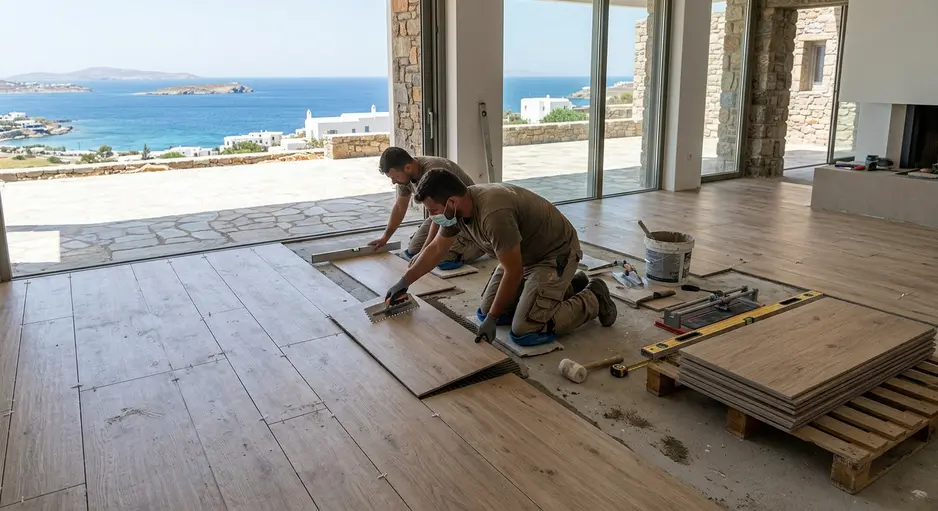
Wood Porcelain Tiles vs Hardwood Flooring
Neither material is best for every project. Wood-look porcelain is generally chosen for moisture resistance, dimensional stability, and low-maintenance care when correctly installed. Hardwood offers authentic grain, natural variation, and a softer feel underfoot.
- Moisture: Porcelain is generally less sensitive to moisture, while timber may react to prolonged exposure.
- Maintenance: Low-maintenance wood effect tiles usually need routine cleaning. Some wood floors may need polishing or refinishing.
- Appearance: Porcelain uses a printed or textured design. Hardwood provides natural material character.
- Repairs: Individual tiles may be replaced if matching stock is available. Some wood floors can be repaired or sanded.
- Installation: Porcelain needs a suitable base and tile installation system. Wood requires flooring-specific preparation.
- Heating systems: Compatibility depends on the complete floor assembly and should be confirmed for the project.
When Natural Wood May Still Be Preferred
Natural timber may be preferred when authentic material character is the main design goal. It may also feel warmer and softer underfoot. Certain wood products can be sanded and refinished, which gives them a different repair path from porcelain. The final decision should reflect the room, budget, maintenance plan, and desired experience.
How Do You Choose a Wood Tile Exporter to Greece?
Verify Product and Quality-Control Information
Before selecting a wood finish porcelain tiles manufacturer or wood effect porcelain tiles exporter, ask for clear product and order information. A professional review should go beyond catalogue images.
- Current catalogue and product codes
- Physical samples
- Technical data sheets and applicable reports
- Available colours, faces, and finishes
- Batch, shade, and calibre control procedures
- Carton, pallet, and loading information
- Inspection options before dispatch
- Production and delivery estimates
A buyer seeking a bulk wood porcelain tiles manufacturer for Greece should confirm that the sample, quotation, invoice, and packing list use matching product references. This reduces confusion when several similar designs are under review.
Compare More Than the Price Per Square Metre
Pricing alone does not show the full landed cost. Greek dealers should compare the minimum order quantity, Incoterm, payment terms, packing method, lead time, sample policy, and breakage procedure. They can also ask whether mixed designs, private-label cartons, or project overage are available.
When evaluating a porcelain wood tiles supplier for Greece, request box and pallet data. These details affect warehousing, unloading, stock planning, and freight calculations.
Approve Samples Before a Bulk Order
- View each colour in natural and artificial light.
- Place several faces together to check grain repetition.
- Review the surface texture and edge finish.
- Confirm size, calibre, thickness, and flatness.
- Match the sample code to the written quotation.
- Request batch approval when project consistency is critical.
This process is useful when choosing an international wood look porcelain tile supplier for Greece, especially for dealer stock or multi-room projects.
Importing 600×1200 Porcelain Tiles into Greece
Which Documents Should an Exporter Provide?
Required documents depend on the shipment and agreed trade terms. Buyers may need a commercial invoice, packing list, bill of lading, certificate of origin where required, and insurance documents under the chosen Incoterm. They should also request applicable product declarations, CE information, and relevant test reports.
Requirements can change, so importers should confirm current customs, tax, and document needs with a qualified Greek customs broker before shipment.
Packaging and Container Planning
A 600×1200 mm wood porcelain tiles supplier to Greece should provide carton dimensions, weights, pallet details, and planned loading quantities. Buyers can also ask about corner protection, pallet security, moisture protection, loading photos, and handling instructions.
There is no universal number of square metres per container. Capacity changes with tile thickness, pieces per box, pallet type, packing layout, container limits, and legal payload rules.
How Much Extra Tile Should a Project Order?
Projects often need extra material for cuts, breakage, layout changes, grain alignment, and future repairs. The correct allowance depends on the room shape and installation plan. Buyers who want to buy 600×1200 mm wood porcelain tiles in Greece should confirm the final quantity with the architect and installer.
Sourcing Wood Porcelain Tiles from Liberta Vitrified
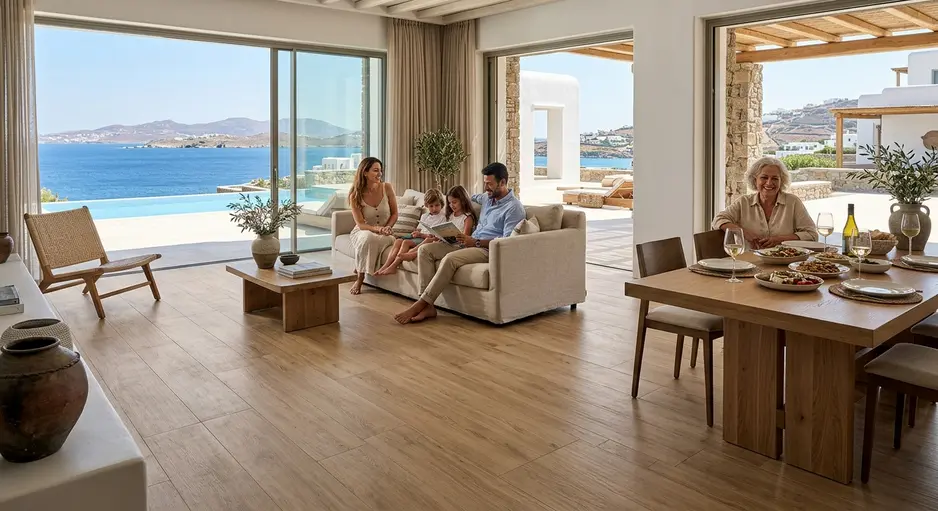
Information Greek Dealers Should Request
Liberta Vitrified can be contacted as a potential sourcing option for Greek importers and project buyers. Before ordering, request current information for the exact products being considered. Product availability, specifications, order terms, and commercial options should be verified directly.
- Current 600×1200 mm wood-look tile catalogue
- Available colours, patterns, and finishes
- Technical specifications and test information
- Minimum order quantity and production lead time
- Sample availability and approval process
- Export packing and container-loading details
- FOB or CIF quotation, as required
- Private-label or territory options, if available
Dealers seeking premium 600×1200 wood porcelain tiles for Greek dealers should define “premium” through measurable product details, finish expectations, and quality checks. A wood porcelain tiles distributor in Greece should also confirm stock continuity and replacement planning before launching a collection.
To discuss designs, samples, specifications, or an export quotation, contact Liberta Vitrified through https://libertavitrified.com/. Verify every product, certification, capacity, and export claim directly before publication or purchase.
Wood Porcelain Tiles Export to Greece
Make a Better Bulk Tile Buying Decision
Selecting a 600×1200 mm wood porcelain tiles exporter to Greece requires a balance of design, tested performance, packing quality, and clear commercial terms. Review several samples, confirm the intended application, and ask for written technical and shipping details before approving a bulk order.
The best 600×1200 mm porcelain tiles for modern interiors are not chosen by colour alone. They must also fit the traffic level, moisture conditions, maintenance plan, and installation system. Greek dealers and project buyers can contact Liberta Vitrified to request current designs, product details, sample availability, and an export quotation.
Frequently Asked Questions
1. Are 600×1200 mm wood porcelain tiles suitable for Greek homes?
They may suit living rooms, bedrooms, kitchens, and selected bathroom areas when the product is rated for the intended use. Buyers must check the surface performance, slip result, substrate, and installation method. Wet spaces may need different specifications from dry rooms.
2. Can wood-look porcelain tiles be used in hotels?
Yes, when the collection’s technical ratings match the traffic, cleaning process, and slip needs of each area. Guest rooms, corridors, receptions, and restaurants may require different performance levels, even when they share the same design theme.
3. Are matte wood finish tiles slippery?
“Matte” describes the look or feel of a surface. It does not prove slip resistance. Ask for the tested slip classification of the specific product and confirm whether it is suitable for the planned dry, wet, residential, or commercial setting.
4. Are 600×1200 porcelain wood tiles hard to install?
Large tiles need careful handling and a flat, stable substrate. The installer must use suitable adhesive, grout, movement joints, and application methods. Installation should follow the tile and installation-system guidance for the project.
5. Can porcelain wood tiles be used with underfloor heating?
They are often considered for correctly designed heating systems, but compatibility is not automatic. The substrate, adhesive, grout, joints, heating cycle, and tile must work as one system. Confirm the full specification before installation.