

Double charge and full body tiles are popular choices for durable floors. They can look similar in a showroom, yet they may perform quite differently after years of use. The right choice depends on foot traffic, abrasive dirt, rolling loads, cleaning methods, safety needs, and budget.
This double charge vs. full body tiles comparison explains how each type is made, where it works best, and what technical details buyers should check. It will help homeowners, architects, distributors, and project buyers make a practical choice rather than relying on appearance alone.
What Are Double Charge and Full Body Tiles?
What are double charge vitrified tiles?
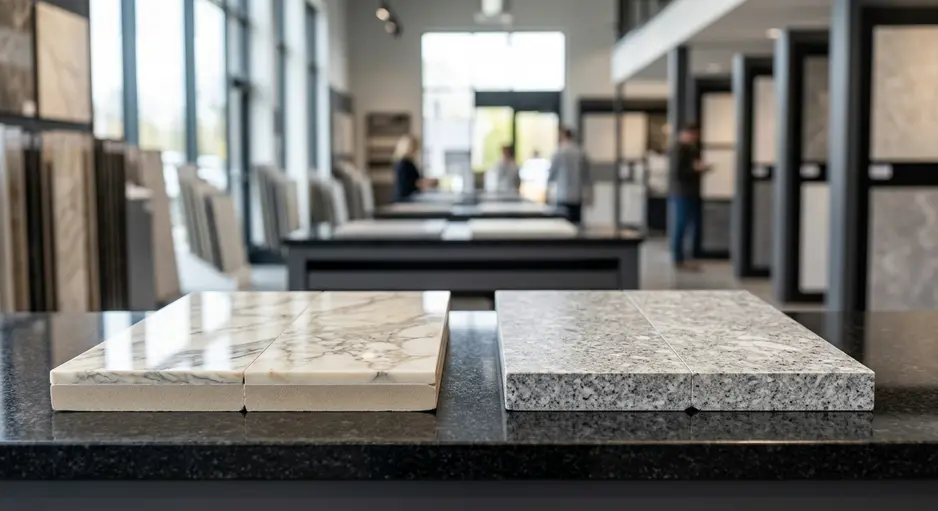
Double charge vitrified tiles are made by pressing two layers of material together. The lower layer forms the main tile body. A pigmented upper layer creates the visible color and pattern.
This decorative layer is thicker than a conventional surface coating. Its exact depth can vary by product and manufacturer, so buyers should not assume that every double charge tile has the same construction.
Because the upper layer has meaningful depth, these tiles can retain their appearance under regular commercial use. They are widely available as polished vitrified tiles and are often chosen for offices, hotels, retail spaces, restaurants, and residential common areas.
What are full body vitrified tiles?
Full body vitrified tiles have color and composition that extend through the tile body. If the surface wears or a small edge chip occurs, the exposed section usually looks similar to the visible face.
This construction is also associated with through body porcelain tiles. It makes marks less obvious, but it does not make a floor scratch-proof or unbreakable. Product quality, test results, installation, and daily care still affect performance.
Heavy duty full body tiles are often considered for busy public buildings, transport areas, shopping centers, and industrial flooring solutions where long-term appearance is important.
Are full body tiles the same as glazed vitrified tiles?
No. A glazed vitrified tile uses a decorative glaze on its surface. This process can create a wide range of colors, patterns, and effects. However, the design does not normally continue through the complete tile body.
In a full body tiles vs glazed vitrified tiles review, the key difference is where the decoration exists. One has consistent body color, while the other relies on a surface glaze. Glazed tile performance depends on the quality and tested wear rating of that glaze.
Expert note: “Vitrified” is not a complete performance specification. Technical test values are more useful than product category names alone.
Double Charge vs. Full Body Tiles Comparison
Key differences at a glance
- Construction: Double charge uses two pressed layers. Full body has consistent material through its thickness.
- Design depth: Double charge has a thick decorative upper section. Full body color extends throughout the tile.
- Wear visibility: Surface wear may become visible on double charge products once it passes through the pigmented layer. It is generally less noticeable on full body products.
- Design choice: Double charge often provides a broader decorative selection. Full body designs may appear more restrained or uniform.
- Abrasion: Both can perform well, but full body products are often preferred where severe wear is expected.
- Cost: Double charge is usually more budget-friendly. Full body products often cost more due to their composition and production needs.
- Common use: Double charge suits many offices, hotels, showrooms, and retail floors. Full body suits demanding public and commercial locations.
Does tile thickness determine durability?
Total tile thickness and decorative-layer depth are different measurements. A thicker tile is not automatically the stronger or more wear-resistant option.
A useful tile thickness comparison should also consider breaking strength, abrasion performance, tile format, substrate condition, adhesive coverage, and expected loads. Installation errors can cause even a high-quality tile to crack or loosen.
Which tile hides scratches and chips better?
Full body tiles usually conceal minor scratches and small chips more effectively because the color continues through the body. Double charge tiles can also retain their appearance well while wear remains within the pigmented upper layer.
No tile should be described as completely scratch-proof. Sand, metal objects, damaged trolley wheels, and poor cleaning methods can mark an abrasion-resistant tile surface over time.
How Do Durability and Performance Differ?
Abrasion resistance in busy spaces
Foot traffic alone is not the only source of wear. Sand, outdoor grit, trolley wheels, luggage, and cleaning equipment can act like abrasives. Entrances often experience more damage than interior corridors with the same number of visitors.
Testing also depends on the product. Surface abrasion methods are commonly used for glazed tiles, while deep-abrasion testing is relevant to unglazed or through-body products. Appropriate ISO 10545 test methods can help buyers compare wear-resistant vitrified tiles on measurable terms.
Water absorption and vitrification
Vitrified and porcelain classifications are linked to very low water absorption. ISO 13006 and EN 14411 provide useful classification references, while parts of ISO 10545 cover specific test methods.
Bulk buyers should request verified laboratory reports for the exact product under review. Broad claims such as “high strength” do not replace values for water absorption, abrasion, stain resistance, and breaking strength.
Breaking strength is not wear resistance
A tile may resist surface wear but still fail when laid over an unsuitable base. Subfloor movement, hollow adhesive areas, poor joint planning, and concentrated loads can lead to cracks.
Large formats need a flat, stable substrate and proper adhesive coverage. Movement joints must also be planned. For durable commercial floor tiles, product selection and installation quality should be treated as parts of the same system.
Slip resistance for commercial floors
A polished finish may look premium, but it may not suit wet entrances, kitchens, wash areas, or ramps. These areas need a finish that meets the project’s required slip-resistance standard.
Safety should come before shine. Confirm how the floor will be used, whether water or grease is likely, and which local building rules apply before choosing a finish.
Which Is Better: Double Charge or Full Body Tiles?
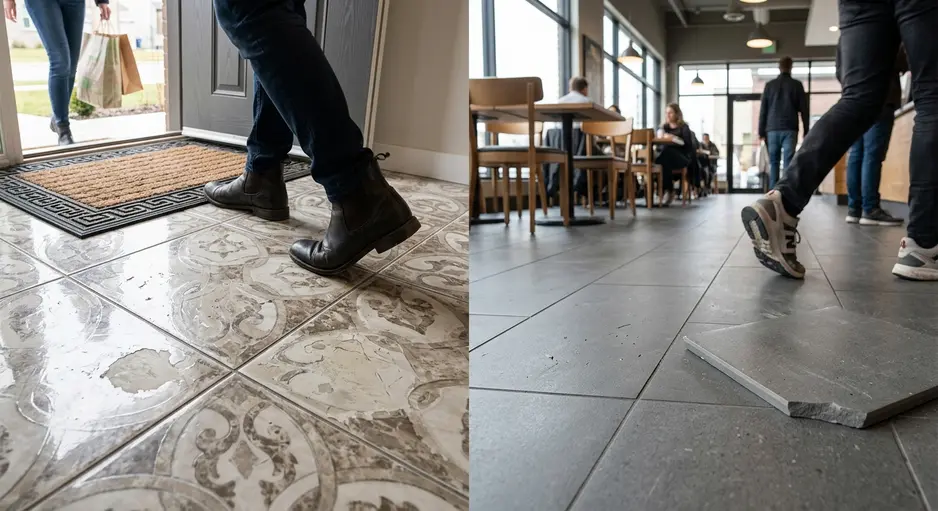
Neither option is better for every project. Double charge can offer strong value, visual variety, and reliable performance for moderate-to-heavy commercial traffic. Full body is often the better choice when severe abrasion and long-term visual consistency are the main concerns.
Best double charge tiles for commercial flooring
Premium double charge tiles can work well in spaces where a polished appearance and controlled project cost are both important. Common applications include:
- Retail showrooms
- Corporate offices
- Hotel lobbies
- Restaurants with controlled indoor traffic
- Educational buildings
- Apartment and residential common areas
The best double charge tiles for commercial flooring are not selected by appearance alone. Their tested ratings must match expected traffic, cleaning routines, and environmental conditions.
Best tiles for heavy foot traffic
Full body products are often suitable high-traffic flooring tiles because regular wear is less visible. They may be considered for shopping mall floor tiles, supermarkets, public institutions, transport terminals, busy entrances, and long-life commercial developments.
Even in these spaces, the product should be chosen using verified technical data. A category label cannot confirm whether a specific tile will handle rolling loads, outdoor grit, or continuous operation.
Are full body tiles suitable for airports and factories?
Airport flooring tiles must cope with luggage wheels, dirt, intensive cleaning, slip risks, and around-the-clock use. For this reason, project specifications may include abrasion, breaking strength, dimensional, and safety requirements.
Factories create different demands. Chemical exposure, equipment movement, impact, point loads, and oils may be more important than foot traffic. A heavy duty full body tile may be suitable only after its chemical, load, and slip performance has been checked.
Practical selection examples
- Fashion showroom: Double charge can provide a polished look at a controlled budget.
- Shopping mall entrance: Full body may preserve visual consistency where outdoor grit causes ongoing abrasion.
- Industrial facility: Full body may work if verified data supports the expected load, chemical exposure, and safety needs.
Advantages and Limitations
Double charge tile advantages
- Thick decorative layer compared with thin surface decoration
- Good wear resistance for many commercial interiors
- Polished, premium appearance
- Competitive cost for large flooring projects
- Availability in common commercial formats
Key limitations include the fact that color may not continue through the complete body. Deep damage can reveal a visual difference. Polished options also need careful placement in wet areas, and performance varies between manufacturers.
Full body tile advantages
- Consistent color through the tile body
- Less visible wear and minor edge damage
- Good long-term appearance retention
- Suitability for demanding public and commercial areas
Full body products usually cost more, and the available designs may be less varied. The higher price does not remove the need for proper substrate preparation, suitable adhesive, correct joints, and routine maintenance.
How to Choose and Maintain Vitrified Tiles
How to choose vitrified tiles
- Estimate average and peak daily traffic.
- Identify sand, grit, trolley, luggage, or equipment exposure.
- Check whether the area will be dry, wet, or exposed to chemicals.
- Compare water absorption, abrasion, breaking strength, stain resistance, and slip data.
- Select a finish that balances appearance, safety, and cleaning needs.
- View samples in the project’s actual lighting.
- Confirm shade, caliber, dimensions, and batch consistency.
- Order extra pieces for cutting and future replacement.
- Follow tile and adhesive installation instructions.
Maintenance of double charge and full body tiles
Remove loose sand and grit with regular vacuuming or dust mopping. Use a suitable pH-neutral cleaner for routine care, and clean spills before they dry.
Avoid harsh acids, rough pads, and chemicals that have not been approved for the tile or grout. Protect completed floors during construction and fit-out, when metal tools and building debris can cause damage.
Entrance mats are especially useful in malls, hotels, offices, and transport buildings. A planned matting and cleaning program can influence long-term floor appearance as much as the tile category itself.
How to Select a Manufacturer or Bulk Supplier
Questions for a full body tile manufacturer
- Is the product genuinely full body or only surface-colored?
- Which standards and test methods apply?
- Are current laboratory reports available?
- What are the shade and caliber tolerances?
- Can samples be supplied from current production?
- Can production support repeat or phased orders?
Choosing a supplier for bulk orders
When evaluating a double charge tiles supplier for bulk orders, review its quality controls, batch consistency, minimum order quantity, lead time, packaging, pallet protection, and claim process. Importers should also confirm container-loading details and the availability of replacement stock.
A full body tiles exporter worldwide should provide clear technical documents, accurate carton and pallet information, export-grade packaging, and reliable shipping support. An international supplier of full body vitrified tiles should also explain destination-market documentation without making unsupported performance claims.
Architects, importers, distributors, and project buyers can contact Liberta Vitrified to request product specifications, samples, export details, and bulk-order support.
Double Charge vs. Full Body Tiles
Conclusion
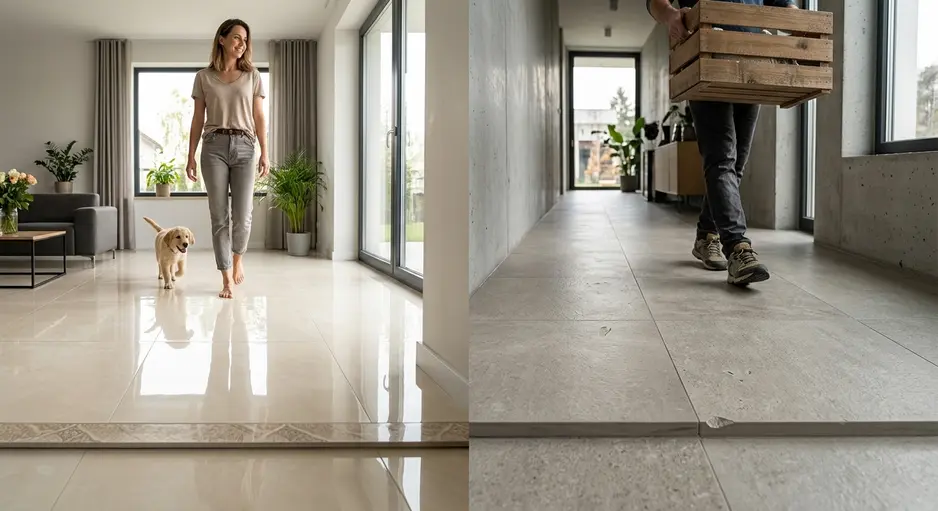
The right choice depends on how and where the floor will be used. Double charge tiles provide an appealing balance of design, durability, and cost for many commercial interiors. Full body tiles are often more suitable where severe wear, abrasive dirt, and long-term appearance retention are key concerns.
Do not select a product by its category or thickness alone. Compare verified abrasion, water absorption, breaking strength, stain resistance, slip performance, and dimensional data. When these details are combined with correct installation and planned maintenance, both options can deliver reliable results.
Frequently Asked Questions
1. Which is better, double charge or full body tiles?
Full body is generally preferred for severe abrasion because wear and minor damage are less visible. Double charge offers a strong mix of durability, appearance, and value for many commercial interiors. The final choice should follow test data and expected site conditions.
2. Are double charge tiles suitable for heavy traffic?
Yes. Quality double charge tiles can suit many busy commercial areas when their technical ratings match the project. Correct installation, entrance matting, and regular cleaning are also essential for long-term performance.
3. Do full body tiles scratch?
All tile surfaces can be scratched under certain conditions. Full body products tend to make scratches and minor chips less visible because their color and composition continue through the tile body.
4. Are full body tiles more expensive?
They are usually more expensive than double charge products due to their homogeneous composition and manufacturing needs. Actual cost varies by format, finish, quantity, packaging, and supplier requirements.
5. Can double charge tiles be used in shopping malls?
They can be used in suitable mall areas. However, entrances and zones with severe grit exposure may need full body products or another tile with higher verified abrasion performance.