

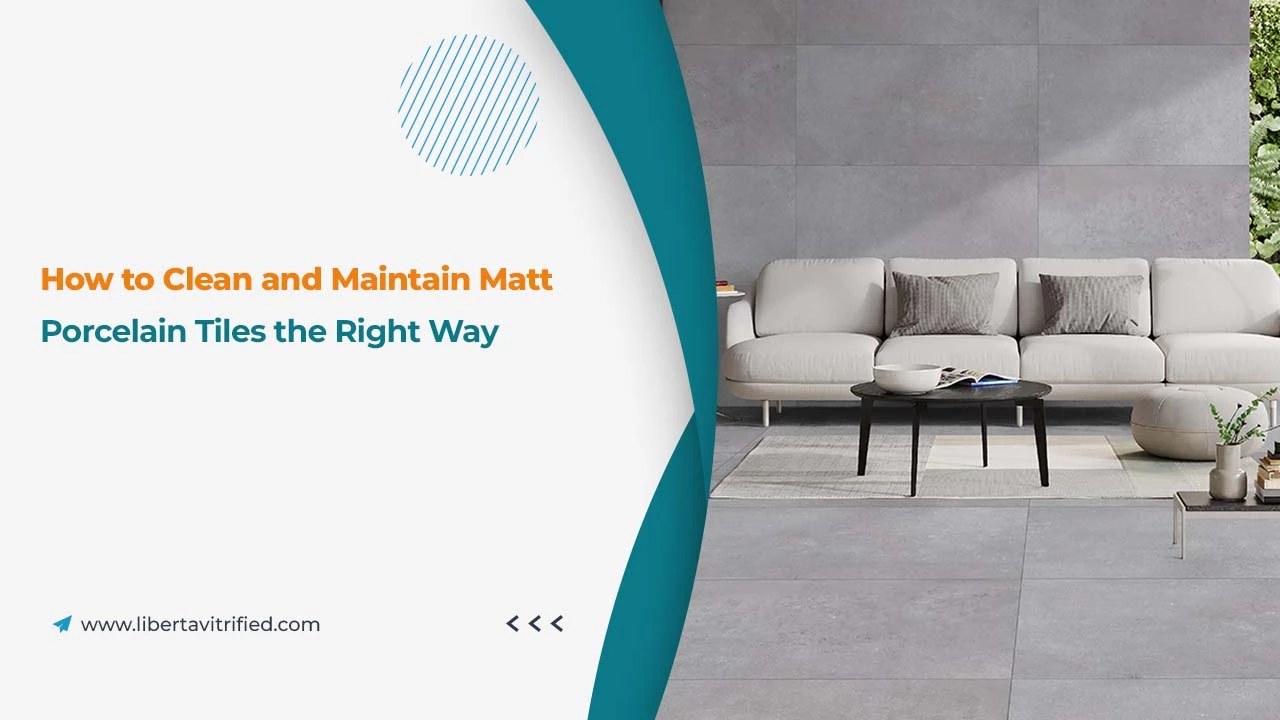
When we talk about having something so elegant and smart, matt porcelain tiles remain unbeatable. They have carved a niche in the tile industry by taking space in modern homes and commercial spaces as well. With muted shades and non-reflective finishing, they captivate the attention of viewers. The charm of matt porcelain tiles lies in their slip-resistant and highly durable features. However, just like any other type of tile or surface, they also need some care and maintenance for their beauty and long life.
Being a trustworthy matt porcelain tiles manufacturer, we know that selecting the ideal tiles is only the first step; what really makes your space stand out over time is how you maintain them. We’ll dispel common misconceptions while guiding you through every aspect of cleaning and preserving matt porcelain tiles, from routine procedures to deep cleaning techniques.
Why You Must Choose Matt Porcelain Tiles?

Before learning about the cleaning techniques, find out why these tiles are worth appreciating and why they are so popular.
-
Non-slip surface: The textured finish offers a safer alternative for damp spaces like kitchens and bathrooms.
-
Stain Resistance: Their surface is solid and less porous, which makes them resistant to stains even if they lack a glossy luster.
-
Natural Look: Matt tiles make spaces more natural and rustic by frequently simulating wood, concrete, or stone finishes.
-
Low Maintenance: With the proper care, they look pristine without constant polishing or sealing.
Tools & Products You’ll Need for Proper Maintenance
-
Soft-Bristle Broom / Vacuum with Hard Floor Setting – for daily dust removal.
-
Microfiber Mop – retains dirt without scratching.
-
pH-Neutral Tile Cleaner – keeps tiles spotless without harming their surface.
-
Grout Brush or Old Toothbrush – to reach grout and corners.
-
Degreaser (for kitchens) – removes stubborn oil stains.
-
Doormats & Rugs – prevent dirt from spreading indoors.
Daily Cleaning Routine: Keep it Easy and Simple
Vacuum or dry sweep first: Use a vacuum cleaner set to hard floors or a soft-bristled broom to start clearing away any loose dirt, dust, and debris. Steer clear of vacuums with revolving brushes since they may cause surface scratches.
Use warm water to mop: After that, use a moist microfiber mop dipped in warm water. This is typically sufficient for everyday cleaning. Porcelain is not porous, but too much water can leak into grout lines, so don’t saturate the tiles too much.
Every Week, use a pH-neutral Cleaner: Use a pH-neutral tile cleanser to remove accumulated dirt at least once weekly. These cleaners keep tiles looking new while being kind to them. Steer clear of cleansers that contain bleaches or strong acids.
Pro Tip: Avoid detergents that contain soap. Over time, the residue they leave dulls the tile.
How to Tackle Stains and Grime: Deep Gleaning Guidelines

Even if you regularly maintain these tiles, there are various areas of the kitchen and entryway that gather stains and dirt. Here is how you can tackle these stains.
Grease and Oil Stains
-
Make use of a tile floor degreasing solution.
-
After letting it sit for five to ten minutes, gently scrub it with a gentle brush.
-
Rinse well with fresh water, then pat dry.
Grout Lines
-
Mix water and baking soda to form a paste.
-
Use a gentle toothbrush to scrape the grout lines after applying.
-
Wipe clean after rinsing.
For simplicity, an alternative is to use a grout cleaner with a spray nozzle.
Hard Water Marks
-
Combine equal parts warm water and white vinegar.
-
Use a cloth to apply, then wait a few minutes before wiping clean.
-
Use a professional limescale remover sparingly for tough spots.
Caution: Before applying a homemade remedy completely, always try it in a tiny, discreet area.
What Should You Avoid When Cleaning Matt Porcelain Tiles
Not every tool or cleaning solution is suitable for tile. The following are some things you should avoid:
-
Steel wool or abrasive scrubbers can scrape the surface and harm the finish.
-
Cleaners that are acidic or alkaline might damage tile unless specifically made for porcelain.
-
Polishes based on wax: These produce a slick coating and draw in more grime.
-
Oily or colored mops: They may leave residues or streaks that are difficult to get rid of.
Preventive Maintenance Tips
Tile cleaning starts with avoiding them from gathering dirt or from getting settled down in the very first place.
Use Doormats and Rugs: To catch dirt before it reaches your tile flooring, place rugs in high-traffic areas and doormats at entrances.
Seal Grout Lines: Although grout is permeable and prone to discoloration, porcelain tiles themselves do not require sealing. Your entire tiled surface will seem brand new if you seal the grout once a year.
Wipe Spills Instantly: Although spills are less noticeable on matte tiles, timely cleaning guarantees that liquids won’t leave a residue or discolor the grout.
Furniture Pads: To prevent scratches or scuff marks, especially in living spaces where furniture is moved around a lot, attach felt pads to the legs of furniture.
Seasonal Deep Cleaning Routine
Spend some time thoroughly cleaning your matt porcelain tiles every few months.
-
Vacuum or sweep to get rid of loose dirt.
-
Apply a mild tile cleanser to warm water or use a steam mop.
-
Use a gentle brush to clean grout and nooks.
-
Use a fresh mop or microfiber cloth to dry the floor.
A chemical-free technique that efficiently removes dirt and sanitizes floors is steam cleaning. But avoid applying too much steam directly to grout lines.
Final Thoughts: Matt Tiles Need Thoughtful Care
Matt porcelain tiles are the ideal combination of style and utility. Without the glare of shine, their exquisite, natural finish elevates interiors. But when properly cared for, they shine the brightest, just like any high-end surface.
If you follow a straightforward regimen, use gentle materials, and pay a little attention to detail, your Liberta Vitrified matt tiles will look just as beautiful as the day they were put in. Regular maintenance guarantees that they will maintain their elegance and usefulness for many years to come, whether they are in your living room, kitchen, bathroom, or patio. We at Liberta Vitrified create tiles that enhance your rooms and represent your lifestyle.
Frequently Asked Questions (FAQs)
Q1. Are matt porcelain tiles hard to clean?
Not at all. Matt porcelain tiles are easier to maintain than natural stone or untreated surfaces. A simple routine of sweeping, mopping with warm water, and using a pH-neutral cleaner once a week keeps them spotless.
Q2. Can I use vinegar to clean matt porcelain tiles?
Yes, but only in diluted form (equal parts warm water and white vinegar). It works well for removing hard water stains and limescale. However, avoid frequent use, as excessive acidity may affect grout lines.
Q3. Do matt porcelain tiles show stains more than glossy tiles?
Matt tiles are less reflective, so stains are not as visible compared to glossy tiles. Their stain-resistant surface makes them a practical choice for kitchens, bathrooms, and outdoor areas.
Q4. What is the best cleaner for matt porcelain tiles?
A pH-neutral tile cleaner is best for routine cleaning. Avoid bleach, ammonia, or soap-based detergents, as they can dull the surface or leave residues.
Q5. Should I seal matt porcelain tiles?
Porcelain tiles do not need sealing because of their non-porous surface. However, grout lines are porous and should be sealed once a year to prevent discoloration and dirt build-up.
Q6. Can I steam clean matt porcelain tiles?
Yes. Steam cleaning is an effective, chemical-free method to sanitize matt porcelain tiles. Just avoid directing too much steam onto grout lines to prevent weakening them.
Q7. Are matt porcelain tiles good for outdoor use?
Definitely. Their slip-resistant surface makes them ideal for patios, balconies, and pool decks. Just ensure regular cleaning to prevent buildup of dirt or moss in outdoor settings.
Q8. How do I prevent scratches on matt porcelain tiles?
Place felt pads under furniture, use doormats to trap dirt, and avoid abrasive cleaning tools like steel wool. This will keep the surface looking new for years