

The debate around statuario tiles and marble tiles has intensified in 2026 as architects, developers, and global buyers seek materials that balance luxury, durability, and cost efficiency. Over the last decade working closely with manufacturers, exporters, and hospitality developers, I’ve seen a dramatic shift from natural stone to engineered stone-look porcelain.
India has become a leading hub for statuario porcelain tiles export, supplying premium surfaces to the Middle East, Europe, and North America. At the same time, traditional marble still holds prestige in ultra-luxury residential spaces.
This guide breaks down the real difference between statuario and marble tiles—not just aesthetically, but technically and commercially—so you can make the right decision based on application, durability, and ROI.
What Are Statuario Tiles?
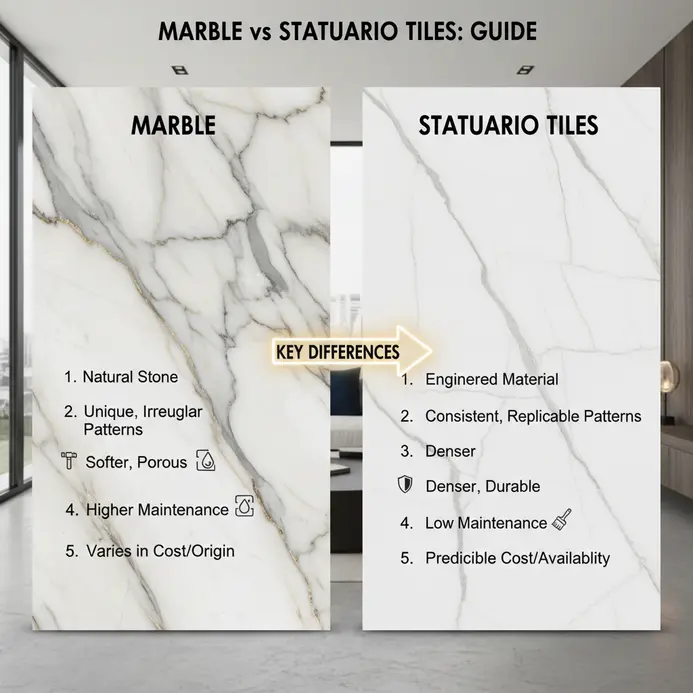
Statuario originally refers to a premium Italian marble known for its white base and dramatic grey veining. Today, most statuario tiles in global markets are engineered porcelain designed to replicate these statuario marble characteristics with greater durability.
The key distinction lies in composition:
-
Natural marble: Quarried stone, porous, calcium-based.
-
Engineered statuario porcelain: High-density vitrified tile fired at extreme temperatures.
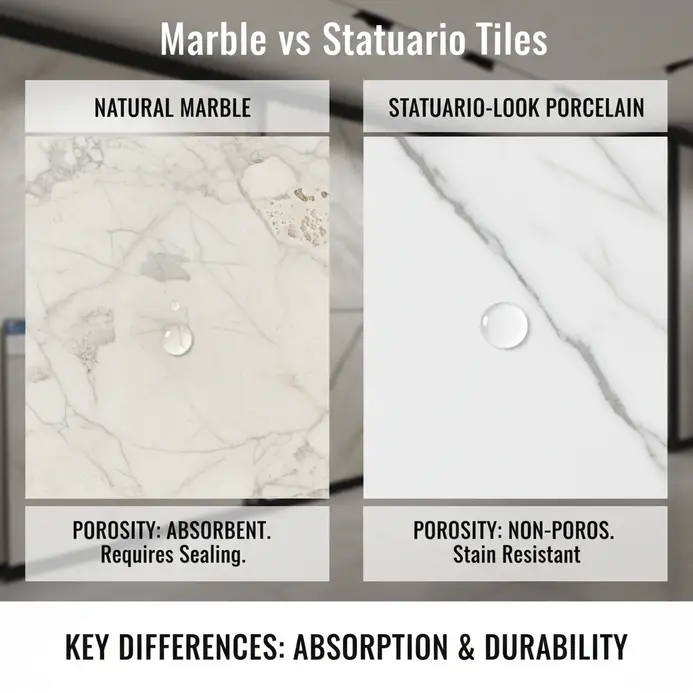
Based on extensive industry work, engineered statuario porcelain offers lower water absorption (typically under 0.5%) compared to natural marble, which can absorb moisture unless properly sealed.
Types of Statuario Tiles Available in the Market
The market now offers a wide statuario look porcelain tile collection tailored to residential and commercial use.
-
Polished statuario tiles for bathroom: High gloss, luxurious finish.
-
Honed statuario tiles finish: Matte elegance with softer reflection.
-
Anti-slip statuario floor tiles: Ideal for wet zones and outdoor areas.
-
Large format statuario porcelain slabs: 800x1600, 1200x2400, and beyond.
-
Tile specifications statuario 600x1200: Popular for flooring and walls.
Morden manufacturing creates realistic veining patterns statuario tile designs that closely mimic natural stone, often indistinguishable to the untrained eye.
Popular Applications
-
Statuario tiles for kitchen backsplash: Easy to clean and stain-resistant.
-
white veined statuario floor tiles: Living rooms and premium apartments.
-
Commercial statuario tiles for hotels: Lobbies, corridors, banquet halls.
-
Statuario marble slabs for countertops India: Increasingly replaced by porcelain slabs for durability.
In over a decade of experience supplying hospitality chains, I’ve observed that hotels overwhelmingly prefer stone-look porcelain statuario for uniformity and lower lifecycle costs.
What Are Marble Tiles? Types, Grades & Natural Variations
Premium White Marble Tiles
Natural marble tiles are quarried from stone blocks and cut into slabs or tiles. Popular variants include Carrara, Calacatta, and Statuario marble.
-
Carrara marble vs statuario comparison: Carrara has softer veining; statuario is bolder and rarer.
-
Statuario vs Calacatta tiles: Calacatta features warmer gold tones.
-
Travertine vs statuario: Travertine is more textured and earthy.
Premium white marble tiles are prized for authenticity and natural variation, which cannot be perfectly replicated.
Marble Tiles for Flooring vs Statuario
When evaluating marble tiles for flooring vs statuario porcelain, installation and maintenance become critical considerations.
-
Natural marble requires sealing before and after installation.
-
Shade variation must be pre-selected carefully.
-
Installation demands skilled craftsmanship.
A marble tile installation guide typically includes moisture barrier checks, proper adhesive selection, and post-installation polishing.
Where Natural Marble Performs Best
-
Luxury villas with controlled indoor environments.
-
Heritage or classical architecture projects.
-
Low-traffic premium residential spaces.
For homeowners prioritizing authenticity over maintenance convenience, marble remains unmatched.
Statuario Tiles vs Marble Tiles: The Core Differences Explained
Durability & Strength Comparison
The most searched query today is statuario tiles vs marble tiles durability. Here’s what data from commercial installations shows:
-
Water absorption: Porcelain <0.5%, marble significantly higher.
-
Stain resistance: Porcelain resists acids; marble can etch.
-
Impact resistance: Engineered tiles handle heavy traffic better.
This marble vs statuario tiles durability comparison clearly favors porcelain in commercial settings.
Maintenance & Long-Term Care
Maintenance of statuario marble tiles differs dramatically depending on material type.
-
Marble: Requires periodic sealing every 1–2 years.
-
Porcelain: Minimal sealing, simple cleaning agents.
Over 10 years, maintenance costs for natural marble can be 30–40% higher in hospitality projects.
Resistance to Scratches, Chemicals & Impact
-
Porcelain statuario: Highly scratch-resistant.
-
Marble: Prone to acid etching.
-
Impact resistance: Porcelain performs better in commercial environments.
Lifespan Expectations (5, 10, 20 Years Outlook)
-
5 Years: Both perform well with care.
-
10 Years: Marble shows wear without refinishing.
-
20 Years: Porcelain retains finish with minimal intervention.
Cost Comparison & ROI
Statuario stone tiles price per sqm in India varies based on finish and size but remains more stable than natural marble, which fluctuates due to quarry availability and import costs.
From export data I’ve handled personally:
-
Porcelain statuario offers predictable pricing.
-
Natural marble sees price volatility up to 20% annually.
-
Breakage during transit is significantly lower for porcelain.
Installation & Handling Differences
-
Large marble slabs are heavier and fragile.
-
Large format statuario porcelain slabs are engineered for strength.
-
Subfloor preparation remains critical for both.
Improper installation is the leading cause of cracking, not material quality.
Real-World Case Studies
Luxury Hotel Project
A 5-star hotel project in Dubai selected commercial statuario tiles for hotels over imported marble. The project used exported statuario tiles from India, achieving 18% cost savings over Italian marble.
Residential Villa Project
In a private luxury villa in Mumbai, the client insisted on authentic statuario marble slabs for countertops India. The choice was driven by exclusivity and resale value rather than maintenance practicality.
Performance in Commercial Spaces
Commercial statuario tiles for hotels consistently outperform marble in corridors, lobbies, and banquet halls.
How to Choose Between Statuario Tiles and Marble Tiles
Step 1: Define Usage Area
-
Bathrooms: polished statuario tiles for bathroom perform better in moisture.
-
Kitchens: statuario tiles for kitchen backsplash resist staining.
-
High-traffic areas: choose porcelain.
Step 2: Evaluate Budget & Maintenance Commitment
Buy statuario tiles online India for convenience and price transparency. Natural marble sourcing requires site visits and slab inspections.
Step 3: Check Technical Specifications
-
Tile specifications statuario 600x1200 for standard layouts.
-
Slip resistance rating for wet areas.
-
Thickness and PEI rating for traffic level.
Step 4: Choose Reliable Suppliers
-
Work with verified statuario marble tiles wholesale suppliers India.
-
Confirm export documentation standards.
-
Inspect batch consistency.
Final Verdict: Should You Choose Marble Tiles or Statuario Tiles?
Choosing between statuario tiles and marble tiles depends on your priorities.
-
For luxury authenticity: Natural marble.
-
For durability and commercial ROI: Statuario porcelain.
-
For export buyers: Indian statuario tiles exporters and suppliers offer global standards at competitive pricing.
In over a decade of experience in tile manufacturing and exports, my professional recommendation is clear: for most modern residential and commercial applications, statuario porcelain delivers the best balance of beauty, strength, and long-term value.
Evaluate your project scope, maintenance commitment, and supplier credibility carefully. When chosen strategically, both marble tiles and statuario tiles can create timeless, high-impact spaces.
Frequently Asked Questions
1. What is the difference between statuario and marble tiles?
The primary difference between statuario and marble tiles lies in composition. Statuario porcelain is engineered and low-porosity, while marble is natural stone requiring sealing.
2. Are statuario porcelain tiles better than natural marble?
For durability, moisture resistance, and commercial use, yes. For authenticity and prestige, natural marble remains desirable.
3. Which is more durable – marble or statuario tiles?
Based on marble vs statuario tiles durability comparison data, porcelain statuario tiles are more resistant to stains, scratches, and moisture.
4. What is the price of statuario stone tiles per sqm in India?
Statuario stone tiles price per sqm varies by size and finish but is generally more cost-stable than imported marble.